When You Should Just Eat What You’re Trying to Serve (Jeremiah 7:16–8:3)

“Thus says the LORD of hosts, the God of Israel: “Add your burnt offerings to your sacrifices, and eat the flesh. For in the day that I brought them out of the land of Egypt, I did not speak to your fathers or command them concerning burnt offerings and sacrifices” (Jeremiah 7:21–22).

Here’s a confusing command, unless you’re reading your Bible carefully. For those who wonder what’s with all the details about the sacrifices in Leviticus, well, here’s one example of where the dictionary of Leviticus makes for quite a dramatic story later on.

bbq-lamb-1159675-1598x1087.jpg

On the surface God seems to be saying two contradictory things in vv. 21 and 22. “Add another one to the fire.” “I never asked for any.” The catch is that burnt offerings were to be consumed whole on the altar; whereas, there were sacrifices of which the offerer partook. God tells them, that when they make a sacrifice, of which they may eat, to add a burnt offering to it, and go ahead and eat that as well. They might as well please their own palate because they’re not pleasing Yahweh. He told them in 6:20 that “their offerings are not acceptable, nor [are their] sacrifices pleasing to [Him].” Since they’re not worshipping, they might as well have a BBQ. Because the lamb is wasted as a sacrifice, they should eat it up so that it’s not a complete wash.

If our baptisms are more about getting the excited wet, rather than signifying the death and resurrection of disciples, we might as well turn the baptistry into a hot tub so that it serves some practical purpose.

Many churches are right to replace congregational worship with concerts, because worship of the true God is far from their hearts and thus cannot be on their lips.

If we’re not going to raise our children in the discipline and instruction of the Lord, let’s deck out the minivan of the church with the entertainment package so that they can be amused as they are driven to hell.

If you give offerings as though they are indulgences, you might as well have kept them for yourself.

Because such sacrifices are full of idolatry, Judah might as well eat the world whole and quit trying to play religion. Many “churches” should follow suit.

Rest? Stop!

rest-area-we-approve-1225977-1280x960.jpg“This life is full of trials, full of troubles, and full of changes. Sin within, and Satan and the world without, will keep a Christian from rest, till he comes to rest in the bosom of Christ. The life of a Christian is a race and what rest have they that are still a-running their race? The life of a Christian is a warfare; and what rest have they that are still engaged in a constant warfare? The life of a Christian is the life of a pilgrim; and what rest has
a pilgrim who is still a-travelling from place to place? A pilgrim is like Noah’s dove, that could find no rest for the sole of her foot. The feast, the snare, the cares, the changes, etc., that attends believers in this world, are such that keep them from taking up their rest here. A Christian hears that word always sounding in his ears, ‘Arise, for this is not they resting-place,’ Micah 2:10. A man may as well expect to find heaven in hell, as to expect to find rest in this world.” —Thomas Brooks, A String of Pearls

rest-area-we-approve-1225977-1280x960.jpg

Backstage Immorality Ruins the Show (Jeremiah 7:1–15)

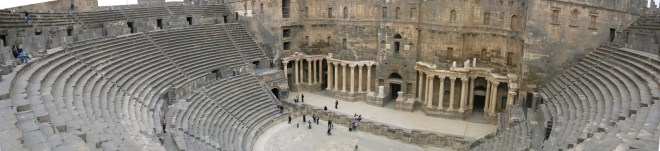
roman-theatar-in-bosra-1231696-1596x366.jpg

“Do not trust in these deceptive words: ‘This is the temple of the LORD, the temple of the LORD, the temple of the LORD.’

Behold, you trust in deceptive words to no avail. Will you steal, murder, commit adultery, swear falsely, make offerings to Baal, and go after other gods that you have not known, and then come and stand before me in this house, which is called by my name, and say, ‘We are delivered!’—only to go on doing all these abominations? Has this house, which is called by my name, become a den of robbers in your eyes? Behold, I myself have seen it, declares the LORD” (Jeremiah 7:4, 8–11)

Judah worships the true God with a false heart so that she might worship false gods with a true heart. Her worship is full hypocrisy. It’s all paint and no reality. It’s two dimensional. It’s flat. It’s on display but it isn’t living. Like painted fire, there is neither heat nor light. Samuel Rutherford once wrote, “You may paint a man, you many paint a rose, you may paint a fire burning, but you cannot paint a soul, or the smell of a rose, or the heat of a fire.” Judah is all paint and no soul. She is all paint and no aroma. She is all paint and no heat.

Judah’s puts on the theatrics of covenant fidelity so that she can fund her life of immorality backstage. She comes to the temple not seeking refuge from sin, but unto sin. In this way she makes the house of Yahweh a “den of robbers.” When Jesus says this in Matthew 21, because of the flipped tables of the money changers, we think we understand all that is meant by the metaphor. But that square peg doesn’t fit as nicely into this round hole. There’s more to this. The den of robbers would have been their hideout between jobs, where they could lie low after one heist and prep for the next one. This is how they come to Yahweh’s house. They think they can take refuge there, not from their sin, but unto sin.

They have a mystical and sentimental view of the temple. They treat the temple as though it were some kind of talisman they could wield. They thought they had God trapped in a box, forgetting that that box was only His footstool. Play with the footstool and expect a kick.

Deceptive words abound in the American Church today. Many are shouting “We are delivered!” only so that they may return to their abominations with a clear conscience. There’s no fruit, but they declare the tree good, and thus, not destined for the fire. Some think they’re good because of who planted the tree, others, where the tree was planted, and some, how it was planted. A preacher cannot deliver you; it matters not if he be the apostle Paul. A church cannot save you, not even if it is a sound and healthy church. A method cannot save you, no prayer will save you, no matter how true the words of the prayer are, if your heart isn’t true.

Hosts think they are delivered because of sentimental-deceptive words, or mystical-deceptive words. They may say “Falls Creek, Falls Creek, Falls Creek!” or “Baptist church, baptist church, baptist church!” or “Baptism, baptism, baptism!” or “Sinner’s prayer, sinner’s prayer, sinner’s prayer!” But neither should you think you are delivered for true words. Deceptive trust in truth is as deadly as trusting in deceptive lies. Do not say to yourself, “Doctrine, doctrine, doctrine!” As one pastor put it, “Doctrine without… life is like spelling everything right on the tombstone.” Believing truth about Christ isn’t the same as trusting in the true Christ. False doctrine can damn you but true doctrine cannot save you; it can only point you to the true Christ, in whom is salvation.

Because of all these deceptive words, many houses called by the name of Christ are really dens of robbers. They are not assemblies of the saints, finding refuge in Christ to live holy lives unto His glory; they are assemblies of the wicked, where they come from wickedness to go to wickedness, but with their consciences eased thinking they are delivered. But God sees such hypocrisy, and none of the talismans of evangelicalism stay His hand of judgment. 

A Drink from Brooks: His Mercy Is More

balance-1172786-1279x867.jpgThy afflictions are not so many as thy mercies, nay, they are not to be named in the day wherein thy mercies are spoken of. What are thy crosses to thy comforts, thy miseries to thy mercies, thy days of sickness to thy days of health, thy days of weakness to the days of strength, thy days of scarcity to thy days of plenty? And this is that the wise man would have us seriously to consider: Eccles. 7:14, ‘In the day of adversity consider,’—but what must we consider? – ‘that God hath set the one over against the other.’ As God hath set winter and summer, night and day, fair weather and foul, one over against another, so let us set our present mercies over against our present troubles, and we shall presently find that our mercies exceed our trouble, that they mightily over-balance our present afflictions; therefore let us be silent, let us lay our hands upon our mouths. —Thomas Brooks, The Mute Christian and the Smarting Rod

All Tarnish and No Silver (Jeremiah 6:16–30)

“I have made you a tester of metals among my people,
that you may know and test their ways.
They are all stubbornly rebellious,
going about with slanders;
they are bronze and iron;
all of them act corruptly.
The bellows blow fiercely;
the lead is consumed by the fire;
in vain the refining goes on,
for the wicked are not removed.
Rejected silver they are called,
for the Lord has rejected them” (Jeremiah 6:16–30)

anorthosite-laurvikite-larvik-norway-6745-1147358.jpg

When God is after silver, bronze won’t do. Jeremiah, as God’s tester of metals, puts Judah into the furnace. During smelting, lead is added and the bellows are blown to introduce oxygen. This oxidizes the lead, so that it acts as flux, combining with impurities to form slag to be removed. All this is done in vain with Judah. The impurities cannot be removed because impurities are all that there are. Judah is all tarnish and no silver. She isn’t a soft malleable precious metal like silver or gold, mixed with some impurities. She is rebellious bronze and stubborn iron all the way through. Judah isn’t a diamond in the rough; she is a lump of coal.

Just because fool’s gold sparkles doesn’t make it valuable. Judah puts on a show of ceremonial obedience, but under the costume, her disobedience goes all the way to the heart (Jeremiah 6:16–20). Judah isn’t a dirty lamb in need of cleaning; she is a goat. Her sacrifices are impure because she is impure. The ore doesn’t need to be purified; it needs to be miraculously transformed.

Are you gold? Are you silver? When you baptize a goat, you don’t get a sheep, you get a wet goat. Many professing Christians don’t need sanctification; they need regeneration. They don’t need to be purified; they need to be born again as a new creation. They need the Midas touch of King Jesus to graciously transform them from being rebellious bronze to repentant silver, from being impure iron to precious gold.

Because Jesus bore the fire of judgment, all who trust in Him are no longer part of the impure ore of this earth doomed for eternal flames; instead, they are precious gold, being refined for the new heaven and the new earth. The flames of purification temporarily burn now for the saints, whereas the flames of destruction will burn eternally for the wicked. If you have not been touched by the King, the flames of this world do nothing for you but expose the impurity that you are.

A Drink from Brooks: You’re Running the Wrong Numbers

numbers-1-1415449.jpgThy afflictions are not so many as thy sins, Ps. 40:12. Thy sins are as the stars of heaven, and as the sand upon the sea, that cannot be numbered. There are three things that no Christian can number: 1, his sins; 2, divine favours; 3, the joys end pleasures that be at Christ’s right hand; but there is no Christian so poor an accountant, but that he may quickly sum up the number of his troubles and afflictions in this world. Thy sins, O Christian, are like the Syrians that filled the country, but thy afflictions are like the two little flocks of kids that pitched before them, 1 Kings 20:27; therefore hold thy peace. —Thomas Brooks, The Mute Christian under the Smarting Rod

WARNING: Non-evaporative Water (Jeremiah 6:1–15)

“Thus says the LORD of hosts:
‘They shall glean thoroughly as a vine
the remnant of Israel;
like a grape gatherer pass your hand again
over its branches.’

To whom shall I speak and give warning,
that they may hear?
Behold, their ears are uncircumcised,
they cannot listen;
behold, the word of the LORD is to them an object of scorn;
they take no pleasure in it.
Therefore I am full of the wrath of the LORD;
I am weary of holding it in.

‘Pour it out upon the children in the street,
and upon the gatherings of young men,
also; both husband and wife shall be taken,
the elderly and the very aged (Jeremiah 6:9–11).’ ”

water-1370297-1600x1200.jpgThe word of Yahweh doesn’t fall to the ground to evaporate into nothing. God’s word never falls idle, but accomplishes His purposes. None of His words are written to be forgotten, lost in some book, rotting away along with the perishable paper on which they were recorded. If the rains of grace are not received, they accumulate behind the dam of God’s long-suffering as a flood of wrath.

God here is conforming His messenger to His message. The repeated warnings Jeremiah has given are met with no reception. Because the people scorn the word, he is full of the wrath of Yahweh. God has been pouring His message into Jeremiah, but as it finds no release by Judah’s receiving it in repentance, it builds inside Jeremiah, ready to burst as wrath. God has made Jeremiah a dam with no release. Now, God commands him to pour it out. Rejected warnings accumulate wrath. If God’s words are not received as a rain of grace, they will destroy as flood of wrath.

As someone has said, “the same sun that melts the ice hardens the clay.” Likewise, the same rains that refresh with grace, will wash away the wicked. For some, Christ is the aroma of life unto life, for others, death unto death (2 Corinthians 2:14–16). The word of Christ will either serve to your salvation or your condemnation. It doesn’t evaporate. If the rain of grace is not received with faith and repentance, it will one day burst as a flood of wrath.

A Drink from Brooks: Charitable Chastisement

“God chastises our carcasses to heal our consciences; he afflicts our bodies to save our souls; he gives us gall and wormwood here, that the pleasures that be at his right hand may be more sweet hereafter; here he lays us upon a bed of thorns, that we may look and long more for that easy bed of down,—his bosom in heaven.

As there is a curse wrapped up in the best things he gives the wicked, so there is a blessing wrapped up in the worst things he brings upon his own, Ps. 25:10, Deut. 26:16. As there is a curse wrapped up in a wicked man’s health, so there is a blessing wrapped up in a godly man’s sickness; as there is a curse wrapped up in a wicked man’s strength, so there is a blessing wrapped up in a godly man’s weakness; as there is a curse wrapped up in a wicked man’s wealth, so there is a blessing wrapped up in a godly man’s wants; as there is a curse wrapped up in a wicked man’s honour, so there is a blessing wrapped up in a godly man’s reproach; as there is a curse wrapped up in all a wicked man’s mercies, so there is a blessing wrapped up in all a godly man’s crosses, losses, and changes: and why then should he not sit mute and silent before the Lord?” —Thomas Brooks, The Mute Christian under the Smarting Rod

Sometimes Not Sharing Is a Good Thing

Scan“In recent days the pro-life, anti-abortion movement has become divided and distracted.

That is why, in my capacity as president of the Baptist General Convention of Oklahoma (BGCO), I am hoping to lead our churches toward unifying around two policy measures that would protect life, with the intent of ending abortion in Oklahoma.” (emphasis mine) —Blake Gideon, “Protecting the Life of the Unborn, Ending Abortion” in the August 1st, 2019 edition of The Baptist Messenger

[DISCLAIMER: The “you” addressed below isn’t merely Blake Gideon in particular but the leadership of the BGCO in general. In some of this I’m reading between the lines, but I think I’m doing so with great warrant and am open to reproof if I’m wrong.]

Remember that childhood friend that when it was your toy they spoke of the virtues of you sharing, but when it was their toy they spoke of the evils of your selfishness? Is something like that going on here? Why is it that when you like the bill we should be unified, but when we like the bill and raise concerns over your disapproval of it, we’re being divisive?

A bill that would have ended abortion altogether in our state was spoken against. Now we’re to be gung-ho about a couple of bills that would still allow for abortion (the first in the case of children younger than approximately 6 weeks, the second under the vague category of “the health of the mother”). Pardon? If I speak for abolition, against your recommendation, I’m being divisive. If I don’t wholly support the bills you endorse, I’m being divisive. Am I missing something?

toothbrushes-1424728-1599x1123.jpgLet’s say that it is me who is sowing division, the real question is should I be? Rather than hash things out on the level of accusations of not sharing or being selfish (meaning unity and divisiveness), let’s talk about what may be and what shouldn’t be shared. Toothbrushes shouldn’t be shared; candy, necessitating said toothbrushes, may be shared. Rather than calls for unity, let’s find out if we’re unified. Yes, we all agree abortion is evil. Yes, if we can run the ball down the field for five more yards I’m ok with that so long as you’re playing to win (and a gain of about five yards is the most I’d expect from such a play). But I’m left wondering if you really want to win this game or just run the clock into overtime again and again so as to pull in more at the concessions.

Forgive me, I do believe the BGCO has good intentions, but I am scratching my noggin trying to figure out how that is so. The reasons for not supporting a bill to end abortion coupled with the reasons for supporting bills that limit abortion don’t add up in my mind. Let’s have the conversation there. If at the end of the debate we disagree, that will prove illuminating and helpful.

Instead of shouting “Share!” when it’s convenient for your toy and “Selfishness!” when it’s ours, let’s vigorously argue for when we should share and when we’re being selfish. Paul and Barnabas departed ways over John Mark. Who was right? I don’t think there was a “right,” but it was ok for them to amiably part ways. Concerning abortion, we’re not dealing with something so innocuous. If Paul and Barnabas could argue and part over Mark, then we should certainly be able to do so concerning abortion. I believe there is a clear right and wrong here. Calls for unity are then a call for silence; a call for one party to sear their conscience. I’m not eager for a parting, but I would like a conversation (here you’ll find a series of posts with questions I’d like answers to). If we can’t come to an agreement, we might not be able to play together anymore, but we can walk away from each other like men.

A Drink from Brooks: You May Cry out To but Not Against

“He that hath deserved a hanging hath no reason to charge the judge with cruelty if he escape with a whipping; and we that have deserved a damning have no reason to charge God for being too severe, if we escape with a fatherly lashing. Rather than a man will take the blame, and quietly bear the shame of his own folly he will put it off upon God himself, Gen. 3:12. It is a very evil thing, when we shall go to accuse God, that we may excuse ourselves and unblame ourselves, that we may blame our God, and lay the fault anywhere rather than upon our own hearts and ways. …When thou art under affliction, thou mayest humbly tell God that thou feelest his hand heavy; but thou must not blame him because his hand is heavy.” —Thomas Brooks, The Mute Christian under the Smarting Rod