The second remedy to consider, That sin is but a bitter sweet. That seeming sweet that is in sin will quickly vanish, and lasting shame, sorrow, horror, and terror will come in the room thereof: Job 20:12-14, ‘Though wickedness be sweet in his mouth, though he hide it under his tongue, though he spare it, and forsake it not, but keep it still within his mouth, yet his meat in his bowels is turned, it is the gall of asps within him.’ Forbidden profits and pleasures are most pleasing to vain men, who count madness mirth, &c. Many long to be meddling with the murdering morsels of sin, which nourish not, but rent and consume the belly, the soul, that receives them. Many eat that on earth that they digest in hell. Sin’s murdering morsels will deceive those that devour them. Adam’s apple was a bitter sweet; Esau’s mess was a bitter sweet; the Israelite’s quails a bitter sweet; Jonathan’s honey a bitter sweet; and Adonijah’s dainties a bitter sweet. After the meal is ended, then comes the reckoning. Men must not think to dance and dine with the devil, and then to sup with Abraham, Issac, and Jacob in the kingdom of heaven; to feed upon the poison of asps, and yet that the vipers tongue should not slay them. —Thomas Brooks, Precious Remedies against Satan’s Devices
Category: Heroes
A Drink from Brooks: Satan’s Presenting the Hook and Hiding the Bait
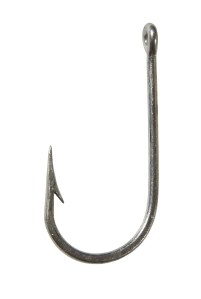
“His [Satan’s] first device to draw the soul into sin is… to present the bait and hide the hook; to present the golden cup, and hide the poison; to present the sweet, the pleasure, and the profit that may flow in upon the soul by yielding to sin, and by hiding from the soul the wrath and misery that will certainly follow the committing of sin.” —Thomas Brooks, Precious Remedies against Satan’s Devices
A Drink from Brooks: Drawing out the Sweet

“Remember, it is not hasty reading, but serious meditating upon holy and heavenly truths, that makes them prove sweet and profitable to the soul. It is not the bees touching of the flower that gathers honey, but her abiding for a time upon the flower that draws out the sweet. It is not he that reads most, but he that meditates most, that will prove the choicest, sweetest, wisest, and strongest Christian, &c.” —Thomas Brooks, Precious Remedies against Satan’s Devices
A Drink from Brooks: Satan Sails with Our Wind
“Whatever sin the heart of man is most prone to, that the devil will help forward. If David is proud of his people, Satan will provoke him to number them, that he may be yet prouder (2 Sam. 24). If Peter is slavishly fearful, Satan will put him upon rebuking and denying of Christ, to save his own skin (Matt. 16:22; 26:69-75). If Ahab’s prophets are given to flatter, the devil will immediately become a lying spirit in the mouths of four hundred of them, and they shall flatter Ahab to his ruin (2 Kings 22). If Judas will be a traitor, Satan will quickly enter into his heart, and make him sell his master for money, which some heathen would never have done (John 13:2). If Ananias will lie for advantage, Satan will fill his heart that he may lie, with a witness, to the Holy Spirit (Acts 5:3). Satan loves to sail with the wind, and to suit men’s temptations to their conditions and inclinations. If they be in prosperity, he will tempt them to deny God (Proverbs 30:9); if they be in adversity, he will tempt them to distrust God; if their knowledge be weak, he will tempt them to have low thoughts of God; if their conscience be tender, he will tempt to scrupulosity; if large, to carnal security; if bold-spirited, he will tempt to presumption; if timorous, to desperation; if flexible, to inconstancy; if stiff, to impenitency.” —Thomas Brooks, Precious Remedies Against Satan’s Devices
The August Theologian: A Tale of Two Cities
“Accordingly, two cities have been formed by two loves: the earthly by the love of self, even to the contempt of God; the heavenly by the love of God, even to the contempt of self. The former, in a word, glories in itself, the latter in the Lord. For the one seeks glory from men; but the greatest glory of the other is God, the witness of conscience. The one lifts up its head in its own glory; the other says to its God, ‘Thou art my glory, and the litter up of mine head.’ ” —Augustine, The City of God
The August Theologian: Love Isn’t a Virtue in Itself
“The right will is, therefore, well-directed love, and the wrong will is ill-directed love. Love, then, yearning to have what is loved, is desire; and having and enjoying it, is joy; fleeing what is opposed to it, is fear; and feeling what is opposed to it, when it has befallen it, it is sadness. Now these motions are evil if the love is evil; good if the love is good.” —Augustine, The City of God
The August Theologian: Terminal
No sooner do we begin to live in this dying body, than we begin to move ceaselessly towards death. For in the whole course of this life (if life we must call it) its mutability tends towards death. Certainly there is no one who is not nearer it this year than last year, and tomorrow than today, and today than yesterday, and a short while hence than now, and now than a short while ago. For whatever time we live is deducted from our whole term of life, and that which remains is daily becoming less and less; so that our whole life is nothing but a race towards death, in which no one is allowed to stand still for a little space, or to go somewhat more slowly, but all are driven forwards with an impartial movement, and with equal rapidity. For he whose life is short spends a day no more swiftly than he whose life is longer. But while the equal moments are impartially snatched from both, the one has a nearer and the other a more remote goal to reach with this their equal speed. It is one thing to make a longer journey, and another to walk more slowly. He, therefore, who spends longer time on his way to death does not proceed at a more leisurely pace, but goes over more ground. Further, if every man begins to die, that is, is in death, as soon as death has begun to show itself in him (by taking away life, to wit; for when life is all taken away, the man will be then not in death, but after death), then he begins to die so soon as he begins to live. —Augustine, The City of God
The August Theologian: The Good
Accordingly, we say that there is no unchangeable good but the one, true, blessed God; that the things which He made are indeed good because from Him, yet mutable because made not out of Him, but out of nothing. Although, therefore, they are not the supreme good, for God is a greater good, yet those mutable things which can adhere to the immutable good, and so be blessed, are very good; for so completely is He their good, that without Him they cannot but be wretched. —Augustine, The City of God
The August Theologian: Making Good of Evil
“But God, as He is the supremely good Creator of good natures, so is He of evil wills the most just Ruler; so that, while they make an ill use of good natures, He makes a good use even of evil wills.” —Augustine, The City of God
The August Theologian: A Way for Man to Man’s God through a God-man
“For since man is most properly understood (or, if that cannot be, then, at least, believed) to be made in God’s image, no doubt it is that part of him by which he rises above those lower parts he has in common with the beasts, which brings him nearer to the Supreme. But since the mind, itself, though naturally capable of reason and intelligence, is disabled by besetting and inveterate vices not merely from delighting and abiding in, but even from tolerating His unchangeable light, until it has been gradually healed, and renewed, and made capable of such felicity, it had, in the first place, to be impregnated with faith, and so purified. And that in this faith it might advance the more confidently towards the truth, the truth itself, God, God’s Son, assuming humanity without destroying His divinity, established and founded this faith, that there might be a way for man to man’s God through a God-man.” —Augustine, The City of God
 No Other Boast