Accordingly, dogmatics is not itself the Word of God. Dogmatics is never more than a faint image and a weak likeness of the Word of God; it is a fallible human attempt, in one’s own independent way, to think and say after God what he in many and various ways spoke of old by the prophets and in these last days has spoken to us by the Son. —Herman Bavinck, Reformed Dogmatics
Author: Josh King
“I’m Against Doctrine” is a Doctrine
When you read “dogmatics” with Bavinck think systematic theology. When you see “dogma,” think doctrine, or truth.
[O]ne who clings to the truth of religion cannot do without dogma and will always recognize in it an unchanging and permanent element. A religion without dogma, however vague and general it may be, without say, faith in a divine power, does not exist, and a nondogmatic Christianity, in the strict sense of the word, is an illusion and devoid of meaning. Opposition to dogma is not resistance to dogma as such, for ‘unbelief has at all times been most dogmatic” (Kant), but to certain specific dogmas with which people no longer agree. —Herman Bavinck, Reformed Dogmatics
The Sheep’s Wool (Matthew 25:31-46)
When Jesus separates the sheep and the goats pronouncing judgment upon them, neither one is shocked by the destination, but the reasoning given. The sheep are blessed for the ministered to Jesus in His need, whereas the goats are cursed because they failed. But we shouldn’t mistake this for saying the sheep merited their destination.
The decisive grounds upon which the sheep and goats are divided is that one is comprised of sheep and the other of goats. The deeds of mercy act as an outer mark that identifies the sheep. They are the evidence, not the grounds. Some similar language about those who eat sheep may help.
Beware of false prophets, who come to you in sheep’s clothing but inwardly are ravenous wolves. You will recognize them by their fruits. Are grapes gathered from thornbushes, or figs from thistles? So, every healthy tree bears good fruit, but the diseased tree bears bad fruit. A healthy tree cannot bear bad fruit, nor can a diseased tree bear good fruit. Every tree that does not bear good fruit is cut down and thrown into the fire. Thus you will recognize them by their fruits. —Matthew 7:15-20 (ESV)
The eating of sheep does not make one a wolf; the being a wolf means an appetite for sheep. The bearing of good fruit does not make one a good tree; the being a good tree means bearing good fruit.
The King/Shepherd says, “All sheep may enter,” and then He turns to you and says, “Come, for you are covered with wool.” The wool didn’t make you a sheep. The last thing any sheep will say on that day is, “I got in by the wool on my baaack, baaack, baaack. Yes this wool, I did it.” If so, an interrogation would commence. “Were you always a sheep? Who then transformed you into a sheep? Who gave you the only food, and water (the Spirit and the Word) that then can cause such wool to grow? Who gave you health and life so that the wool could grow? Who protected you and led you beside still waters so that the wool could grow?” The Shepherd gets all the credit. When He says, “Come for you are full of wool,” He is saying, “Look at what I did. See. This one is mine.”
What is the distinctive wool specifically mentioned here are a mark of those who are the Good Shpeherd’s? Love for the church. Shouldn’t we as Christians love all who are destitute? Certainly. Is that the point of this text. By no means. “The least of these,” are “my [Jesus’] brothers.” This language echoes Matthew 10:40-42 and Matthew 18 where the “little ones,” are Jesus’ little ones, His disciples.
One evangelical pastor wrote a popular book titled They Love Jesus but Not the Church. He had some legitimate criticisms of the church, but he missed it with his title. You cannot love Jesus and not love the church. If you fail to love the church, you do not love Jesus. You are a goat.
Beloved, let us love one another, for love is from God, and whoever loves has been born of God and knows God. Anyone who does not love does not know God, because God is love. …If anyone says, ‘I love God,’ and hates his brother, he is a liar; for he who does not love his brother whom he has seen cannot love God whom he has not seen. And this commandment we have from him: whoever loves God must also love his brother. —1 John 4:7-8, 20-21
Hero 2014: The Dogmatician
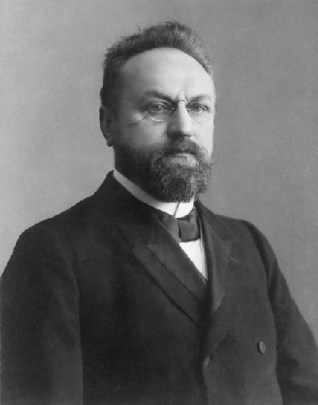 I don’t believe the Bible is a book of heroes. The Bible does have heroes in it, but that is not what it is about. It is a book about the Hero. Nonetheless, I do believe in having heroes, and I believe it is Biblical to have them.
Heroes are not perfect, and thus they point us to Christ in three ways. Their faults (weaknesses and sins) point us to the Savior that they, and we, all need. With this foundation we learn two further truths concerning their strengths. First, they are a result of God’s gifting and working in them such that He gets all the glory. Second, their strengths also point us to Jesus by whom they are graded – Jesus is the ultimate curve breaker. All heroes are judged in relation to Him.
Every year I single out one hero to study in particular. This year I will study the life and works of Herman Bavinck.
Herman Bavinck (1854-1921) was a Dutch Reformed theologian. Early in his career he acted as a pastor for one year. Thereafter he began teaching at Kampen Theological Seminary where he remained for 20 years before moving to the Free University of Amsterdam.
Theologian extraordinaire, still he loved the church and always served her, and constantly preached for her. He was especially well loved by his students, understood the arguments of those with whom he disagreed, stated the truth clearly, and sought peace insofar as he could.
His magisterial work, Reformed Dogmatics will be the focus of my reading this year; only recently has the full translation of which been made available in English. John Frame says it is “by far the most profound and comprehensive Reformed systematic theology of the twentieth century.” Richard B. Gaffin Jr. writes that it is, “Arguably the most important systematic theology ever produced in the Reformed tradition.”
Steward Kings (Matthew 24:14-30)
God created man a slave, yet, a king. Man is a vassal king, a king under the Emperor. God created man. God gave man everything man has. God named man. God commanded man. God is God. Man is man. God is king. Man is slave. Yet, God turns to man as man’s King and says to him with full and rightful authority, “have dominion.”
Man is made in the image of God. Lots of hypothesizing goes on as to what the imago Dei consists in but I think the Genesis 1 is really quite clear. One of the things spelled out for us there is that the King made a king. This incorporates so many of the imago Dei theories.
Man has dominion. This is why man’s plummet (fall seems too trite a word) impacts creation. As goes the king, so goes his kingdom. But, man’s role was secondary. We little kings cannot curse this earth more than the King can bless it. The second Adam’s rule has a glory that surpasses all that the first Adam’s destroyed. It is His rule that transforms ours, so that we more truly image Him forth with sincere hearts.
Every man, from the lowest to the highest, is a king. Some men have smaller realms, others have bigger ones, but we are all kings. Yet, we are slaves always. Sinners don’t mind the king role so much. Adam was aiming for more of that. The slave part is the rub. Man is to rule the little domain he has been given for a little time as a steward king of the eternal Emperor of the cosmos.
From your career to your hobbies, from your driving to your bedtime hour, from your public persona to your virtual one on Facebook, from your clothes to your innermost thoughts and dreams, from your wish list to your owned possessions, from your leisure to your labor, from your television viewing to your reading, from your app choices to your courting choices, from your casual encounter to the children you raise—all, no exceptions, not one square inch, not one spare second are yours. All are gifts entrusted to you to use for His glory.
Jesus Held By the Wood
Jesus held by the wood.
Delivered and delivering,
Jesus held by the wood.Witnesses on either side.
Mary silhouetted,
quietly gazing
with great feeling
on her son,
the sky dark above.
As at the beginning,
so at the end.Jesus held by the wood.
Delivered and delivering,
Jesus held by the wood.The scene of Christmas
and of Calvary,
of the cradle
and the cross.—Mark Dever, The Message of the New Testament
Getting all Dressed up for Nothing (Matthew 25:1-13)
“Of course that guy is out,” we say of the wicked servant (Matthew 24:48-51), but the ten virgins cause us to think much more soberly. They cause us to think like the disciples. When Jesus warned that one of them would betray Him, none responded, “I know, that guy!” Instead they asked, “Is it I?” When we look at the five foolish virgins we are graciously startled that “be ready,” isn’t a message for them. “Watch!” isn’t a command for outsiders, but a message for those “inside” the church, for those who think they will be inside the feast, for those who think they are inside the ark of Christ protected from the flood waters of God’s wrath.
The wicked slave played a slave of the master, but proved himself to be an enemy. The wicked slave despises Jesus’ coming, whereas foolish virgins are deceived concerning his coming. The veneer is different, but the same kind of rotten wood meant for the fire underlies both. The wicked don’t sing, “We’ll Work till Jesus Comes,” but drunkenly belt, “We’ll Party while Jesus Is Gone.” They don’t so much believe in Jesus’ return as His absence. The virgins keep themselves pure for the party. They don’t party with the drunkards like the wicked slave, but they don’t party for the wrong reasons. Underneath all the religiosity is still a heart that loves something else.
To illustrate let’s switch back from the wedding entourage to the bride herself, for that is what the ten virgins show us. Theologians speak of the visible and invisible church. The visible church is the church as man sees it, wheat and tares. The invisible church is the church as God sees it. In other words, there is the church as she appears, and the church as she truly is. The reasons we have ten virgins instead of one bride is to prevent this metaphor from making the bridegroom sinful by polygamy, or from getting weird with a bride with split personalities and then further from being gruesome as the bridegroom splits his bride in two keeping only the desirable part. Jesus has one true bride and some girls are getting all dressed up for nothing. Many a bride have been ecstatic on their wedding day for it to be borne out later that their joy had nothing to do with the bridegroom. She loved the idea of herself of being married, or of stability, or of status, or an idea of her husband that was not her husband. But Jesus’ true bride is no gold digger, no trophy-husband seeker, no self-glorifying status seeker. She does not think that the day of His return is her day, but rejoices that it is all about Him.
The Bridegroom is no fool. Fools can fool others, even themselves, but they cannot fool Him.
Tolle Lege: What Did You Expect?
 Readability: 1
Length: 287 pp
Author: Paul David Tripp
What Did You Expect? bursts your rainbow-hued bubble of marriage utopia and trades it for storm clouds. But for those honest with themselves, those who realize that they are sinners married to sinners, the bubble bursting makes way for the refreshing, life-giving rains of grace. Play as if your marriage has no death in it and you will find death. Own up to all the ugliness you both bring to this glorious thing called marriage, and Beauty will invade.
Praise God there are several good books on marriage that I recommend, but this one might just be the most helpful for me for the task of counseling those who tried to live myth of sinless matrimony.
Marriage is a beautiful thing that only reaches what it was designed to be through the methodology of a painful process.
So, what does give you reason to continue when the little problems have gotten under your skin or the big problems have left you devastated? What does produce a marriage with sturdy love, unity, and understanding? I think the answer I am about to give will surprise many of you. Here it is: a marriage of love, unity, and understanding is not rooted in romance; it is rooted in worship. Now, you may be able to read all the words, but you still might not understand the depth of the insight of this principle.
What does it mean to say that a marriage is “rooted in worship?” The word worship is a tricky word. When the average person hears the word worship he thinks of a gathering, of hymns, an offering, and a sermon. But there is a biblical truth embedded in this word that is vital to understand if you are ever going to figure out why you struggle in your marriage and how those struggles will ever get solved. Worship is first your identity before it is ever your activity. You are a worshiper, so everything you think, desire, choose, do, or say is shaped by worship. There is simply no more profound insight into the reason people do the things they do than this, and once you get hold of it, it opens doors of understanding and change that were never before opened to you.
I have become more and more persuaded that marriages are fixed vertically before they are ever fixed horizontally. We have to deal with what is driving us before we ever deal with how we are reacting to one another. Every relationship is victimized in some way when we seek to get from the surrounding creation what we were designed to get from God. When God is in his rightful place, then we are on the way to putting people in their rightful place. But there is more. I am convinced that it is only in the worship of God in our marriages that we find reason to continue.
WTS Books: $12.78 Amazon:$12.29

Tolle Lege: Gospel Deeps
 Readability: 1
Length: 201 pp
Author: Jared Wilson
I read Jared Wilson not because he pastors a big church (he doesn’t), but because he preaches a big gospel (the gospel that truly builds the church big). Gospel Deeps was a delight to read, one of my favorite this year. As is par, I will let the book speak for itself.
My driving conviction in this book is that the gospel of Jesus Christ is big. Like, really big. Ginormous, if you will. And deep. Deep and rich. And beautiful. Multifaceted. Expansive. Powerful. Overwhelming. Mysterious. But vivid, too, and clear. Illuminating. Transforming. And did I mention big?
It is a sad irony, then, that the ever-fashionable impulse to do justice to the depths of God’s love amount to a very dramatic exercise in one-dimensionalism. This is polyhedronal stuff, man. Woe to the flatteners of what is hyperspatial, multi-dimensional, intra-Trinitarian, eternal in ways awesomer than “one year after another.”
The gospel in fact is scaled to the very shape of God himself.
The gospel announces the fullness of God for the fullness of man despite the fullness of sin.
The tannins of Christ blood contained many hints and strains, a variety of atonement blessings, but they are all pressed for through gods wrathful crushing. When the wrath of God satisfied, the penalty is paid and therefore the victories secured and his love is fulfilled.
He lives a short life and dies that we might die short while and live.

While the Teacher is Out (Matthew 24:36-51)
Just like Noah’s days, right? Well, yes, and no. Chicken Little-prophecy pastor says things will be deplorable, just like in Noah’s time, when Jesus returns. But Jesus does not say they were gluttonously eating, drinking till sloshed, and giving in homosexual marriage. They were simply eating, drinking, and marrying. These are normal things, existence things, life things. These are things one does when they don’t expect the apocalypse to knock on their door tomorrow. The point isn’t the evil of Noah’s times, but the unexpectedness. The point of Matthew 24:36-25:30 isn’t to give you a sign (evil days) so that you can know when Jesus will return. The point is to give you a slap in the face to wake you from your slumber so that you live as though that Jesus will return.
Evangelical Christians confess Jesus’ coming, but do they believe it? Though everyone of us falls into slumber, where is the emphasis? The wicked slave didn’t doubt the master’s return, but he believes in his delay. Many believe in Jesus’ delay, not Jesus’ return, and there is a mammoth difference between the two. One loves, one hates. The Rabbi is out of the room. Do you act as one who loves His absence or His presence?
 No Other Boast