Singing While the Bombs are Falling (Habakkuk 3:17–19)

This post was originally published on January 12th, 2015. It was lightly revised and republished on April 19th, 2020.

climate-change-1325882_1280.jpg

I think anyone can get the general sense of Habakkuk 3:17 from an initial reading, but reading that verse in light of the entire Old Testament and then seeing what Habakkuk goes on to say is like hearing the “Hallelujah Chorus,” within the entirety of Handel’s Messiah—it makes it soar.

Figs, grapes, and olives were the choicest produce of the land. They’re iconic; frequently used in the prophetic corpus. There seems to be an increasing severity to the images Habakkuk uses. The absence of figs by itself hardly suggests privation. From grapes they received their daily drink, but these wouldn’t be essential for life. From the olive they resourced oil not only to anoint their faces, but to fuel their lamps and cook their food. The fields yielding no food transitions from frills to necessities. The flocks being cut off not only means the absence of another food source, but also of clothing. Finally, the cattle being absent from the stalls suggests not so much that beef isn’t now an alternative to mutton, but that their tractors have been stolen. Now there is not only no food, there is no possibility of food. David Prior paints the canvas well:

Everything has been destroyed. There is no grain, oil or wine. There is no meat or wool. There is no food of any kind—fruit, vegetables, cereals, milk, meat. It is not simply a devastated economy. It is the end of everything that can keep body and soul together. There is nothing, absolutely nothing—and an invading army takes possession of the land, pillaging and raping with indiscriminate violence. It is Bosnia, Vietnam and Rwanda rolled into one. ‘How could life be sustained at all in such conditions?’ Nothing to eat, nothing to drink, nothing to wear. Not just poverty, but the enemy stalking the land. Nowhere to hide.

But this is only the general sense that a good reading of the text itself can give us. There is a much deeper significance. Our story begins in a garden of plenty and peace. It is the story of a kingdom: God’s people in God’s place under God’s rule. Man rebels against God’s rule and is driven from the garden, separated from God—not His people. The earth is cursed. Thorns grow. But God calls Abraham out for Himself. He promises to make from Abraham a people for Himself, to give them a land, and to bless them—to reverse the curse.

Habakkuk gives us a picture of the curse gone full bloom, consuming all so that nothing blooms. Habakkuk is saying that though there is not one tangible evidence to His senses of the covenant God made with His people, yet he will rejoice in Yahweh. When the only part of God’s promises that you have is God Himself, that is all you need. Just like Abraham, Habakkuk can’t see the promises, but greets them from afar (Hebrews 11:8–16).

Picture a devastated village within German occupied territory during the second great war receiving news that the tide has turned. The war isn’t over, but they believe it will be soon. In the midst of the bombed out buildings and stripped gardens, with tattered clothes they sing and dance with joy. When there is not one tangible sign of the kingdom come, when all you have is the Scripture’s declaration of Christ’s victory, this is all faith needs to rejoice because it is all that faith ever has. When faith sings in the midst of darkness it demonstrates that the joy of the kingdom isn’t in the people, the place, or the rule (peace and righteousness) themselves in isolation from God as though that were possible. The joy of the kingdom is that it is God’s people in God’s place under God’s rule.

Turn off the Phone and Turn a Page

book-1659717_1280.jpg

“Our upbringing and the whole atmosphere of the world we live in make it certain that our main temptation will be that of yielding to winds of doctrine, not that of ignoring them. We are not at all likely to be hidebound: we are very likely indeed to be the slaves of fashion. If one has to choose between reading the new books and reading the old, one must choose the old: not because they are necessarily better but because they contain precisely those truths of which our own age is neglectful. The standard of permanent Christianity must be kept clear in our minds and it is against that standard that we must test all contemporary thought. In fact, we must at all costs not move with the times. We serve One who said, ‘Heaven and Earth shall move with the times, but my words shall not move with the times’ (Matthew 24:35; Mark 13:31; Luke 21:33).” ——C.S. Lewis, “Christian Apologetics” in C.S. Lewis Essay Collection & Other Short Pieces (HarperCollins Publishers, 2000), pp. 149

How to Grow a Symphony (Habakkuk 3:1–16)

This post was originally published on January 5th, 2015. It was lightly revised on April 13th, 2020.

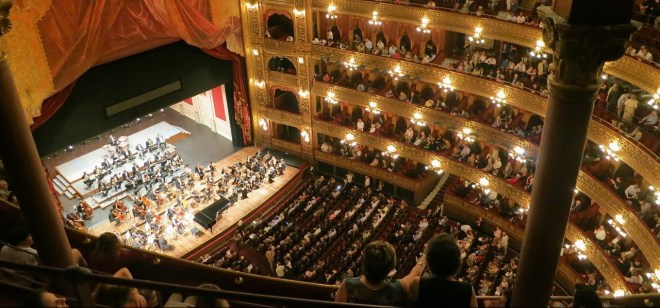
opera-594592_1280

Habakkuk begins with lament and ends with a prayer praise. Habakkuk is unique among the prophets, because instead of speaking for God to the people, he speaks to God for the people. In the last chapter the uniqueness is ratcheted up.

“A prayer of Habakkuk the prophet, according to Shigionoth.”

This isn’t just a prayer of Habakkuk; this is to be a prayer and song of praise for the people of God. “Prayer” here is a liturgical term to introduce this”psalm”, just as it is used in Psalms 17, 86, 90, 102, 142. As for “Shigionoth,” well, we haven’t the slightest, other than that this puts Habakkuk’s song in the same league as Psalm 7. “Selah,” occurs here three times; the only instances of the word in the Scriptures outside of the Old Testament psalter. Finally, Habakkuk ends the song with the subscript “To the choirmaster: with stringed instruments.”

Because Habakkuk has cried, the people can sing. Because Habakkuk has lamented, and God has spoken, the people of God, His remnant, may prepare for exile with a song of faith on their lips. Habakkuk has lamented for the people; now he leads them to sing.

This is a song of joy born out of a lament of confusion. The fruit of joy grew out of the soil of confusion, watered by the tears of sorrow. This is always God’s way. On a hill called Golgotha, meaning “place of a skull,” and watered with blood, God grew the tree of life. This is a song for the darkness; a pure and holy light for the darkest of caves. This isn’t a song for the naive, the gullible, or the delusional. This is a song you can sing when a child dies, when cancer is diagnosed, and when riots plague your city. This is a song of rooted unshakable joy. This isn’t “If You’re Happy and You Know It.” This isn’t Pharrell’s “Happy.” It is William Cowper’s “God Moves in a Mysterious Way.”

I’m afraid that just as many “church members” don’t know the joy of salvation because they’ve never known the sorrows of repentance, likewise, many saints don’t know rooted joy because they rarely lament sin and its devastation. They’ve ignored the sorrows meant to drive them into the depths of God. To often we are like Nebuchadnezzar, confident in the city of glory we’ve built for ourselves. If that is you, and you are God’s, prepare for suffering. And, I would admonish you, embrace it as a great mercy. God breaks our mute idols that we might worship the living God. He removes His rays of blessings that we might not be infatuated with them and turn our heads to the Sun of all glory. If you are God’s child know this: His taking is always a giving. You may leave the shallow joy of an imaginative children’s song behind, but you will find an eternal symphony of solid joy that you’ll never tire of. That symphony is the redemption of our Triune God.

The Don: Humble Science

milky-way-1023340_1280.jpg

‘But he [Joseph] came to believe in the Virgin Birth afterwards, didn’t he?’

‘Quite. But he didn’t do so because he was under any illusion as to where babies came from in the ordinary course of nature. He believed in the Virgin Birth as something super-natural. He knew nature works in fixed, regular ways: but he also believed that there existed something beyond nature which could interfere with her workings—from outside, so to speak.’

‘But modern science has shown there’s no such thing. ‘

‘Really,’ said I. ‘Which of the sciences?’

‘Oh, well, that’s a matter of detail,’ said my friend. ‘I cant give you chapter and verse from memory.’

“But, don’t you see.’ said”I, ‘that science never could show anything of the sort?’

‘Why on earth not?’

Because science studies nature. And the question is whether anything besides nature exists—anything “outside”. How could you find that out by studying simply nature?’

——C.S. Lewis, “Religion and Science” in C.S. Lewis Essay Collection & Other Short Pieces (HarperCollins Publishers, 2000), pp. 143–144

The Threat of Security (Habakkuk 2:6–20)

This post was originally published on December 29, 2014 and was revised  on April 3, 2020.

Woe to him who gets evil gain for his house,
to set his nest on high,
to be safe from the reach of harm!
You have devised shame for your house
by cutting off many peoples;
you have forfeited your life.
For the stone will cry out from the wall,
and the beam from the woodwork respond.

—Habakkuk 2:9–11

pawel-czerwinski-zBTYRFCeaS0-unsplash

When threatened, picking up a sword could be the most dangerous response. Reaching for a gun when an officer has commanded “Freeze!” is a fool’s act. Sometimes, the supposed wisdom of security is really the folly of unbelief. All our attempts at security might be nothing more than thinly veiled self-reliance and idolatry.

Nebuchadnezzar built an eagle’s nest where he thought his dynasty and kingdom would be safe. Walls were erected wide enough for a chariot to travel on. Much was invested in security, but all this was counterproductive because the most crucial factor in any building program wasn’t heeded—the One who holds the atoms of every stone, brick, and piece of lumber together—God Almighty.

Unless the LORD builds the house,
those who build it labor in vain.
Unless the LORD watches over the city,
the watchman stays awake in vain.
—Psalm 127:1

All that was for safety only testified against Babylon. The materials gained by evil means antiphonally cry out against her (2:11), just as Abel’s blood cried out against Cain (Genesis 4:10; Habakkuk 2:12). Where men see glory, God sees sin; and He isn’t intimidated. Babylon was a city built with blood and sin; and thus, it was not a city to flee to, but to flee from. Worse than building their own prison, they’d constructed nothing more than a giant lightning rod to attract the unbearable storm of God’s wrath.

Your efforts at security may not be mortared with blood, but if they’re an expression of self-reliance and idolatry, then it’s still bonded with explosive-laced sin and a fire is coming. Tis far better to be Habakkuk in certain-to-fall Jerusalem, confusingly trusting in the Rock (1:12). The righteous shall live by faith (Habakkuk 2:4).

The Don: There Are No Ordinary People

jacek-dylag-PMxT0XtQ--A-unsplash.jpg

“It is a serious thing to live in a society of possible gods and goddesses, to remember that the dullest and most uninteresting person you talk to may one day be a creature which, if you saw it now, you would be strongly tempted to worship, or else a horror and a corruption such as you now meet, if at all, only in a nightmare. All day long we are, in some degree, helping each other to one or other of these destinations. It is in the light of these overwhelming possibilities, it is with the awe and circumspection proper to them, that we should conduct all our dealings with one another, all friendships, all loves, all play, all politics. There are no ordinary people. You have never talked to a mere mortal. Nations, cultures, arts, civilization—these are mortal, and their life is to ours as the life of a gnat. But it is immortals whom we joke with, work with, marry, snub, and exploit—immortal horrors or everlasting splendors. This does not mean that we are to be perpetually solemn. We must play. But our merriment must be of that kind (and it is, in fact, the merriest kind) which exists between people who have, from the outset, taken each other seriously—no flippancy, no superiority, no presumption. And our charity must be real and costly love, with deep feeling for the sins in spite of which we love the sinner—no mere tolerance or indulgence which parodies love as flippancy parodies merriment. Next to the Blessed Sacrament itself, your neighbor is the holiest object presented to your senses. If he is your Christian neighbor he is holy in almost the same way, for in him Christ is vere latitat—the glorifier and the glorified, Glory Himself—is truly hidden.” —C.S. Lewis, “The Weight of Glory” in C.S. Lewis Essay Collection & Other Short Pieces (HarperCollins Publishers, 2000), pp. 105–106

Shaking our Confidence to Strengthen our Faith (Habakkuk 1:12–2:5)

This post was originally published on December 22, 2014 and was lightly revised on March 30, 2020.

Habakkuk: “We shall not die.”

Yahweh: “The righteous shall live by his faith.”

—Habakkuk 1:12; 2:4

Habakkuk laments. God responds. Yet, God’s response seems to rattle more than settle Habakkuk. God’s answer to evil appears only to be greater evil. Habakkuk is flabbergasted as to how God can use the more evil Babylonians for reproof such that the wicked swallows up the man more righteous than he.

But before Habakkuk launches into further lament, expressing his greater confusion, he takes comfort in recalling who God is. He reasons, “Are you not from everlasting? We shall not die.” How does God’s being from everlasting result in the conclusion that they shall not die? God is from everlasting, and what he does is from everlasting (2 Kings 19:25; Isaiah 46:9–10). Also, God is from everlasting, therefore, what He does is everlasting. He makes a covenant with Abraham that is an everlasting covenant (Genesis 17:7). God’s covenant love for his people is from everlasting, and is everlasting. When Habakkuk cries out “my God, my Holy One” he is speaking the language of covenant, just as when a husband says “my wife.”  Habakkuk’s addressing God as “the LORD,” or Yahweh is not insignificant or unrelated. Yahweh is the covenant name of God, given by Him to His people for them to remember Him by throughout all their generations (Exodus 3:15). Habakkuk knows God as holy, righteous, good, and faithful because of who God has revealed Himself to be for His people. He calls Yahweh his Rock (cf. Psalm 62:6–7). Habakkuk comes before God, on the basis of God. In the midst of confusion, Habakkuk finds comfort in who God is, and yet, it is who God is that is the reason for his confusion. His theology and his reality don’t seem to jibe.

sven-scheuermeier-VNseEaTt9w4-unsplash.jpg

When God answers Habakkuk a second time, he explains how he will judge the Babylonians but that is all. He makes no explicit promises of salvation, discloses nothing of His plan to make it right in the end, offers no explanation of how everything will work out, and states not how He can remain righteous in all of this. God simply contrasts the proud man with the man who lives by faith. The man of faith lives, and he lives by his faith. By implication, and as it is spelled out in the rest of chapter 2 concerning the Babylonians, the proud man dies. With this, God is calling for Habakkuk to go deeper into what Habakkuk has already expressed he believes about God—that He is the everlasting, holy God of covenant, and that He is a sure and steady Rock of salvation.

In the midst of injustice, tragedy, and suffering, you don’t need to understand the situation; you need to believe in who God has revealed Himself to be. We don’t need situation specific answers; we need to lean into the revelation of who God is, what He has done, and what He promises to do.

The Don: A Problem that Says We Have a Bigger Problem

tie-690084_1280.jpg

“Unless we return to the crude and nursery-like belief in objective values, we perish. If we do, we may live, and such a return might have one minor advantage. If we believed in the absolute reality of elementary moral platitudes, we should value those who solicit our votes by other standards than have recently been in fashion. While we believe that good is something to be invented, we demand of our rulers such qualities as ‘vision’, ‘dynamism’, ‘creativity’, and the like. If we returned to the objective view we should demand qualities much rarer, and much more beneficial—virtue, knowledge, diligence and skill. ‘Vision’ is for sale, or claims to be for sale, everywhere. But give me a man who will do a day’s work for a day’s pay, who will refuse bribes, who will not make up his facts, and who has learned his job.” —C.S. Lewis, from “The Poison of Subjectivism” in C.S. Lewis Essay Collection & Other Short Pieces

When Your Chapter Is Dark (Habakkuk 1:1–11)

This post was originally published on December 15, 2014 and was lightly revised on March 23rd, 2020.

Habakkuk: “Why do you make me see iniquity, and why do you idly look at wrong?”

Yahweh: “Look among the nations, and see; wonder and be astounded. For I am doing a work in your days that you would not believe if told.”

—Habakkuk 1:3, 5

klim-sergeev-UYNH5VCsYPU-unsplash.jpgHabakkuk begins in lament and ends in praise, yet, nothing has changed. As far as the circumstances on the ground are concerned, violence abounds. Habakkuk begins in lament and ends in praise because nothing has changed. God is still God.

Habakkuk laments because of the violence and injustice committed by the leaders of Judah. God answers by telling Habakkuk to zoom out and see the bigger picture. God sees on vastly larger scale than we do and in His revelation, He gives us a glimpse of His perspective. Imagine someone who has only seen an ugly part of Yosemite and when asked about the park replies he finds it repulsive; or the person who has only read or seen the darkest part of an epic tale saying it’s horrid. Zoom out. God is calling for Habakkuk to read on to the next chapter and beyond.

Frodo and Sam queried what kind of tale they had fallen into. They knew, that as in all good tales, they they couldn’t truly know the ending, yet, when they began to think of their tale in light of the bigger one it was wrapped up in, they took hope.

Yes, that’s so,’ said Sam. ‘And we shouldn’t be here at all, if we’d known more about it before we started. But I suppose it’s often that way. The brave things in the old tales and songs, Mr. Frodo: adventures, as I used to call them. I used to think that they were things the wonderful folk of the stories went out and looked for, because they wanted them, because they were exciting and life was a bit dull, a kind of a sport, as you might say. But that’s not the way of it with the tales that really mattered, or the ones that stay in the mind. Folk seem to have been just landed in them, usually—their paths were laid that way, as you put it. But I expect they had lots of chances, like us, of turning back, only they didn’t. And if they had, we shouldn’t know, because they’d have been forgotten. We hear about those as just went on—and not all to a good end, mind you; at least not to what folk inside a story and not outside it call a good end. You know, coming home, and finding things all right, though not quite the same—like old Mr Bilbo. But those aren’t always the best tales to hear, though they may be the best tales to get landed in! I wonder what sort of a tale we’ve fallen into?’

‘I wonder,’ said Frodo. ‘But I don’t know. And that’s the way of a real tale. Take any one that you’re fond of. You may know, or guess, what kind of a tale it is, happy-ending or sad-ending, but the people in it don’t know. And you don’t want them to.’

‘No, sir, of course not. Beren now, he never thought he was going to get that Silmaril from the Iron Crown in Thangorodrim, and yet he did, and that was a worse place and a blacker danger than ours. But that’s a long tale, of course, and goes on past the happiness and into grief and beyond it—and the Silmaril went on and came to Eärendil. And why, sir, I never thought of that before! We’ve got—you’ve got some of the light of it in that star-glass that the Lady gave you! Why, to think of it, we’re in the same tale still! It’s going on. Don’t the great tales never end?’

‘No, they never end as tales,’ said Frodo. ‘But the people in them come, and go when their part’s ended. Our part will end later—or sooner.

‘And then we can have some rest and some sleep,’ said Sam. He laughed grimly. ‘And I mean just that, Mr. Frodo. I mean plain ordinary rest, and sleep, and waking up to a morning’s work in the garden. I’m afraid that’s all I’m hoping for all the time. All the big important plans are not for my sort. Still, I wonder if we shall ever be put into songs or tales. We’re in one, of course; but I mean: put into words, you know, told by the fireside, or read out of a great big book with red and black letters, years and years afterwards. And people will say: ‘‘Let’s hear about Frodo and the Ring!’’ And they’ll say: ‘‘Yes, that’s one of my favourite stories. Frodo was very brave, wasn’t he, dad?’’ ‘‘Yes, my boy, the famousest of the hobbits, and that’s saying a lot.’’’

‘It’s saying a lot too much,’ said Frodo, and he laughed, a long clear laugh from his heart. Such a sound had not been heard in those places since Sauron came to Middle-earth. To Sam suddenly it seemed as if all the stones were listening and the tall rocks leaning over them. But Frodo did not heed them; he laughed again. ‘Why, Sam,’ he said, ‘to hear you somehow makes me as merry as if the story was already written. But you’ve left out one of the “chief characters: Samwise the stouthearted. ‘‘I want to hear more about Sam, dad. Why didn’t they put in more of his talk, dad? That’s what I like, it makes me laugh. And Frodo wouldn’t have got far without Sam, would he, dad?’’ ’

‘Now, Mr. Frodo,’ said Sam, ‘you shouldn’t make fun. I was serious.’

‘So was I,’ said Frodo, ‘and so I am. We’re going on a bit too fast. You and I, Sam, are still stuck in the worst places of the story, and it is all too likely that some will say at this point: ‘‘Shut the book now, dad; we don’t want to read any more.’’’

‘Maybe,’ said Sam, ‘but I wouldn’t be one to say that. Things done and over and made into part of the great tales are different.’ *

Habakkuk finds himself in a dark part of the tale and God’s answer is that the next chapter is even darker. God’s answer to violence is greater violence, but, it is used violence. This is not the last chapter, nor is it even the darkest. We’re not at the end of the story yet, but we’ve seen the climax and if you look at the tale that has been told thus far, you may be confident that the Author isn’t going to botch the ending. He wrote Himself into the very darkest chapter and burst through the other side with life and light and eternal bliss for His people. The greatest injustice ever was that of the cross and it was an injustice ordained by God for His glory and His people’s good (Acts 2:22–24). God has answered in bold red the question, “Why do the wicked prosper?” For His glory and His people’s good, and nothing more.


*Tolkien, J. R. R. (2004). The Return of the King. London: The Folio Society LTD.

Offline Church

internet-3471739_1280.pngLet’s begin with some qualifications, that is, my presuppositions. I’m not wanting to miff everyone at the same time. This particular argument (meant in the old sense of setting forth reasons) is intended for those friends with whom I agree more. It’s worth recalling Chesterton’s observation that, “People generally quarrel because they cannot argue.”

Many pastors, and many of them better than I, have satellite campuses where the sermon is taken in by video. Some refer to these campuses collectively as a church. On a lesser but related level, others live stream their services so that those not present can participate in church. I am not a fan of multisite, multiservice, or multimedia for the purpose of virtual participation as a way of doing “church.” I think these multis contrary to nature of what it means for the church to gather as the church. So before I go on to miff others, to my multiple friends who do multi-church, to you with whom I agree less on this topic, I am not arguing with you here. I want to argue with those with whom I agree more. If you don’t think my premises valid, there’s no point in me pressing you with my conclusion.

Perhaps this quarantine has me itching to make less friends, but I don’t believe that to be my true intent. I don’t want to make less friends; I want to make better friends and I hope my friends will return the favor and seek to make better of me. Lord knows I need it. So then, for you who share my quibbles with the multis, I want to give a word of caution concerning “online church.”

When a father wields the rod, his children shouldn’t stuff their pants. When God disciplines His children, we shouldn’t try to mitigate the pain. In years past, when the saints were incapable of meeting, they sharply felt the loss. Such privation should drive us deeper into lamentation, contrition, and petition for mercy. If God has acted so that the assembly cannot assemble, let us not fool ourselves that we are. Instead, let us feel profoundly the sting.

Dear brothers, with whom I agree more, if you don’t believe church can be done by means of the interwebs, don’t try now. I don’t doubt many of you are better shepherds than I and that your motives are sound and your hearts full of love, but words matter. Use technology to shepherd your flock, but not to redefine. Offer supplements, but not substitutes. If you, as a shepherd, offer something to your scattered flock, don’t give them the impression that they are assembling when they are not. Don’t call non-church “church.”

As there is no substitute this side of glory for the assembly that will then take place, so there is no substitute for the foretaste of it in special work and presence of our Lord when the saints assemble in covenant faithfulness to receive the grace of God by His ordained means of word and sacrament. Corporate worship is a promised anticipation of this future glory. Bonhoeffer realized the glory of this and that it is a glory that some saints longingly go without.

“So between the death of Christ and the Last Day it is only by a gracious anticipation of the last things that Chris­tians are privileged to live in visible fellowship with other Christians. It is by the grace of God that a congregation is permitted to gather visibly in this world to share God’s Word and sacrament. Not all Christians receive this bless­ ing. The imprisoned, the sick, the scattered lonely, the proclaimers of the Gospel in heathen lands stand alone. They know that visible fellowship is a blessing. They re­member, as the Psalmist did, how they went ‘with the multitude… to the house of God, with the voice of joy and praise, with a multitude that kept holyday’ (Ps. 42:4). But they remain alone in far countries, a scattered seed ac­cording to God’s will. Yet what is denied them as an actual experience they seize upon more fervently in faith.”*

The darkness is meant to create a longing for the light. While it is dark, let us long. When the sun rises, let us sing. In all things, let us express gratitude. Yes, the mature can receive even the rod with thanksgiving, knowing it it the rod of our perfect heavenly Father.

In closing, know this post is intended from one shepherd to other shepherds; but for those sheep listening in, a word of caution: better to submit to your elder across the street than rebel with another across the country. He’s likely a far better shepherd than I. If your conscience is bound as mine is, respectfully and lovingly let him know, and then watch with the acknowledgement that whatever you’re doing, you’re not doing church.


*Bonhoeffer, D. (1978). Life Together: The Classic Exploration of Faith in Community (pp. 18–19). Harper Collins.