“Which are the Churches on earth which are producing the greatest effect on mankind? The Churches in which the Bible is exalted. Which are the parishes in England and Scotland where religion and morality have the strongest hold? The parishes in which the Bible is most circulated and read. Who are the ministers in England who have the most real influence over the minds of the people? Not those who are ever crying ‘Church! Church!’ but those who are faithfully preaching the word. A Church which does not honour the Bible is as useless as a body without life, or a steam engine without fire. A minister who does not honour the Bible is as useless as a soldier without arms, a builder without tools, a pilot without compass, or a messenger without tidings.” —J.C. Ryle, Light From Old Times
“He was a burning and shining lamp, and you were willing to rejoice for a while in his light. But the testimony that I have is greater than that of John.”
—John 3:30; 5:35–36
O what paradoxical glory! As this lamp fades, he shines brightest. John was not the Light, but he was a lamp. It is when the lamp exclaims “I am not the Light” that it shines brightest. When John says “I am not the Christ” it is then that he radiates with Christ-like glory. Edward Klink comments, “It was only at the point of his ‘not’ that the Baptist could truly be who he was supposed to be, a messenger for the message and a witness to the true ‘I AM.’”
When a loyal herald announces the coming of the King, he isn’t downcast when people then move to the side and look down the street. That’s the point! If John were a fish, this is water. John, as one sent before the Lord, heralds, “Behold the Lamb of God who takes away the sin of the world.” And when the crowd then turns their eyes from him to the bridegroom, he “rejoices with joy.”
When all eyes look down the street for the king, that is when the herald is greatest and gladdest. Saints, this is oxygen, to use our lungs to say, “We are not! He is! Do not look to us. Look to Christ! We are just a voice. Jesus is the Word.” Saints, do you truly want to live? Then fill your longs with John’s exclamation, “He must increase, but I must decrease.”
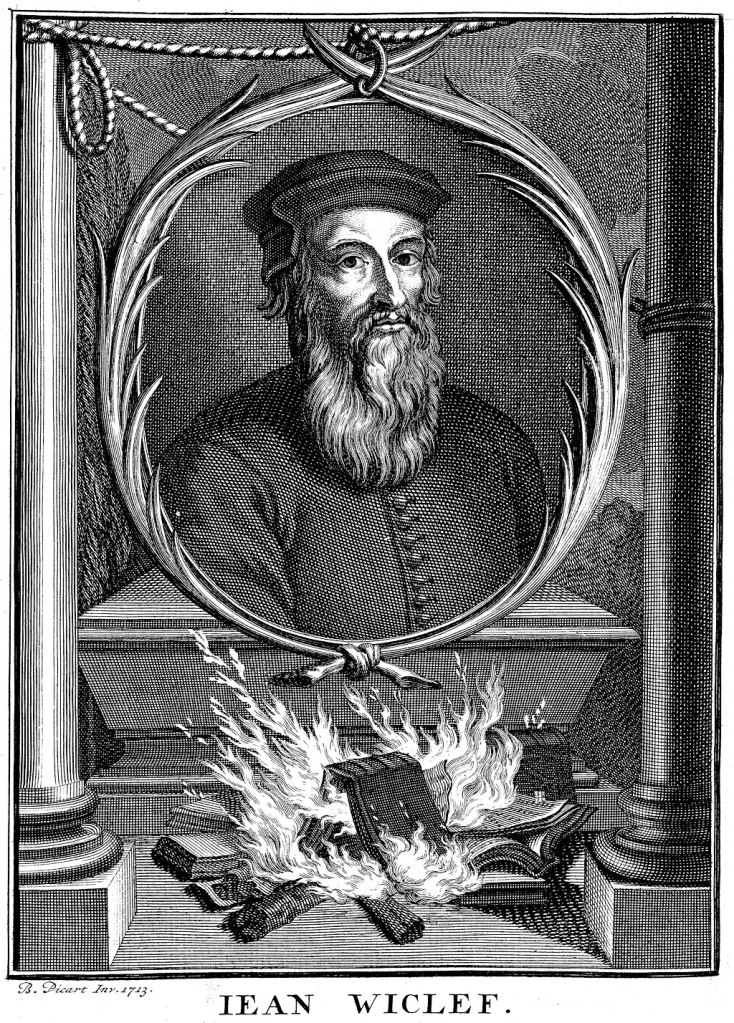
“The importance of this great principle can never be overrated. It lies at the very foundation of Protestant Christianity. It is the backbone of the Articles of the Church of England and of every sound Church in Christendom. The true Christian was intended by Christ to prove all things by the word of God, all churches, all ministers, all teaching, all preaching, all doctrines, all sermons, all writings, all opinions, all practices. These are his marching orders. Prove all by the word of God; measure all by the measure of the Bible; compare all with the standard of the Bible; weigh all in the balances of the Bible; examine all by the light of the Bible: test all in the crucible of the Bible. That which can abide the fire of the Bible, receive, hold, believe, and obey. That which cannot abide the fire of the Bible, reject, refuse, repudiate, and cast away. This is the standard which Wycliffe raised in England. This is the flag which he nailed to the mast. May it never be lowered!” —J.C. Ryle, “John Wycliffe” in Light from Old Times
9 Nicodemus said to him, “How can these things be?” 10 Jesus answered him, “Are you the teacher of Israel and yet you do not understand these things? 11 Truly, truly, I say to you, we speak of what we know, and bear witness to what we have seen, but you do not receive our testimony. 12 If I have told you earthly things and you do not believe, how can you believe if I tell you heavenly things? 13 No one has ascended into heaven except he who descended from heaven, the Son of Man. 14 And as Moses lifted up the serpent in the wilderness, so must the Son of Man be lifted up, 15 that whoever believes in him may have eternal life.
John 3:9–15
In the first part of the conversation with Nicodemus, Jesus speaks of what must be done to Nicodemus. In the second part of the conversation, Jesus speaks of what must be done for Nicodemus. Man must be born from above. The Son of Man must be lifted up. The Spirit must cause regeneration. The Son must accomplish redemption.
The transition from the work of the Spirit in Nicodemus to the work of the Son for Nicodemus happens with Nicodemus’ clumsy question, “How can these things be?” Jesus both rebukes and then answers Nicodemus’ question.
“You must be born again.”
“How can these things be?”
“The Son of Man must be lifted up.”
The lifting up of the Son of Man is the how behind man’s being born from above. Regeneration is the Spirit’s application of the redemption accomplished by the Son. Because of the dying of the Son of Man, the Spirit makes men alive.
For man’s salvation, man needs the work of Christ for Him, and the work of the Spirit in Him. The Spirit must renew. For the Spirit to renew, the Son must be lifted up. The Son of Man was lifted up. Thus, the Spirit causes men to be born from above. And behind both the sending of the Son to redeem and the sending of the Spirit to renew is the love of the Father.
Here is how Paul spoke of these things in Titus 3:4–7.
“But when the goodness and loving kindness of God our Savior [referring to the Father] appeared, he saved us, not because of works done by us in righteousness, but according to his own mercy, by the washing of regeneration and renewal of the Holy Spirit, whom he poured out on us richly through Jesus Christ our Savior, so that being justified by his grace we might become heirs according to the hope of eternal life.”
“Mark what I say. If you want to do good in these times, you must throw aside indecision, and take up a distinct, sharply cut, doctrinal religion. If you believe little, those to whom you try to do good will believe nothing. The victories of Christianity, wherever they have been won, have been won by distinct doctrinal theology, by telling men roundly of Christ’s vicarious death and sacrifice, by showing them Christ’s substitution on the cross and His precious blood, by teaching them justification by faith and bidding them believe on a crucified Savior, by preaching ruin by sin, redemption by Christ, regeneration by the Spirit, by lifting up the bronze serpent, by telling men to look and live, to believe, repent and be converted. This, this is the only teaching which for eighteen centuries God has honored with success, and is honoring at the present day both at home and abroad. Let the clever advocates of a broad and undogmatic theology—the preachers of the gospel of earnestness and sincerity and cold morality—let them, I say, show us at this day any English village or parish or city or town or district, which has been evangelized without “dogma,” by their principles. They cannot do it, and they never will. Christianity without distinct doctrine is a powerless thing. It may be beautiful to some minds, but it is childless and barren. There is no getting over facts. The good that is done in the earth may be comparatively small. Evil may abound and ignorant impatience may murmur, and cry out that Christianity has failed. But, depend on it, if we want to “do good” and shake the world, we must fight with the old apostolic weapons, and stick to “dogma”. No dogma, no fruits! No positive evangelical doctrine, no evangelization!” —J.C. Ryle, Holiness
“This man came to Jesus by night and said to him, “Rabbi, we know that you are a teacher come from God, for no one can do these signs that you do unless God is with him.”
—John 3:12
What are we to make of Nicodemus’ statement? He says nothing disagreeable. He says much that is true. He seems to be on the right trail. He is different from the other leaders. Yet, at this point, it is not enough.
He addresses Jesus as “Rabbi,” an honorable term for a teacher that means “master.” But compare his use of “Rabbi” to that of Andrew and the disciple who was likely John, “Rabbi, where are you staying?” (1:38). Andrew and John address Jesus as Rabbi, wishing to be His disciples. Nicodemus does so, as one who believes he is His peer. This can be seen in his next statement.
“We know you are a teacher,” Nicodemus continues. Who is this “we”? The rulers, the Sanhedrin, the Pharisees and the Sadducees. The fisherman’s approach to the Savior, having received John’s testimony, expressed humility. Nicodemus however, lets Jesus know that they know. How nice it must have been to have their recognition, as though the brambles said to the tree, “Cousin Oak, we recognize you as a woody plant.”
Further, they know He is “come from God.” He is God-sent. And the reason they know this is, Nicodemus says, is because no one can do the signs that Jesus does unless God is with him. Instead of demanding a sign, as his infuriated colleagues did earlier, this Pharisee say that the signs Jesus is doing, they see them, and they testify that Jesus is “a teacher come from God.”
But when you begin to listen to Jesus’ reply, you sense something is wrong, but what exactly is it? I believe there are basically two things. First, Nicodemus is a man. Pause. Back up. Read this passage again, but beginning with 2:24 and then ignoring helpful, yet intrusive man-manufactured address markers.
“But Jesus on his part did not entrust himself to them, because he knew all people and needed no one to bear witness about man, for he himself knew what was in man. Now there was a man of the Pharisees named Nicodemus, a ruler of the Jews.”
Jesus doesn’t entrust Himself to Nicodemus. Yes, he speak to Him differently than He does the other rulers, Still, He also speaks to Nicodemus differently than He does Andrew or Peter or Philip or Nathanael. Something is wrong. Nicodemus is a man. Jesus knows what is in man. John has given us subtle clues that something is wrong inside Nicodemus. Light may be shining without, but there is still darkness within.
Second, Jesus is more than a man. Nicodemus confesses true things about Jesus, but he doesn’t confess Jesus. John wrote this book so that you might believe, not just select true things about Jesus as you might perceive them, but so that you might perceive the truth of who Jesus is and what He has done and thus believe in Him. John wrote for this purpose and thus the events that He records were for this purpose: so that you might believe that Jesus is the Christ the Son of God.
Nicodemus’ statement is really a question. The very question that was put to John the Baptist in 1:19–23. The same question that was essentially put to Jesus when they demanded a sign. “Who are you?” Nicodemus recognizes Jesus as “a teacher come from God.” He fails to recognize Him as the Christ, the Son of God.
Know this, it is not enough to sincerely compliment Jesus with truth. Nicodemus is notably different, but he isn’t different enough. He must be born again. There is a way of complimenting and praising Jesus with truth, that falls flat. Nicodemus’ compliment falls flat, like that of another ruler. “And a ruler asked him, ‘Good Teacher, what must I do to inherit eternal life?’ And Jesus said to him, ‘Why do you call me good? No one is good except God alone’” (Luke 18:18–19). It does no good for a man to compliment Jesus as a man. You must worship Him as God.
22 When therefore he was raised from the dead, his disciples remembered that he had said this, and they believed the Scripture and the word that Jesus had spoken.
23 Now when he was in Jerusalem at the Passover Feast, many believed in his name when they saw the signs that he was doing.
—John 2:22–23 (emphasis mine)
The two scenes of the temple cleansing end with the disciples “remembering” (vv. 17, 22). Their remembering sets up a contrast, not only with what has preceded, but with what is next introduced.
In the first instance, the disciples remembering is set against the sellers and money changers on one side, and the authorities’ questioning on the other. While the sellers are violating Scripture, the disciples come to remember it.
Second, their remembering is set again in contrast again with the authorities questioning and then with the crowds “believing.” The disciples’ remembering was a believing. The crowd’s believing was the kind that would forget. Not all believing is believing. The authorities demand a sign for belief. The crowds believe for a sign. Saving faith is the result of the work of God within a man. It matters not what wonders are done without. Remember Pharaoh?
Some of you question. You don’t believe in Jesus. You are outright opposed to Him. You might be religious. You might believe in God. You believe some good things about Christ. But as to the Scriptures’ central claims, you demand a sign. In some ways, yours is a healthier state, for you know how you stand in relation to the Christ of the Bible. But as creation testifies that there is a God and that you stand under His wrath, so too Scriptures testify that Jesus is the Christ and that there is grace for sinners if you would receive Him.
Do not demand a sign as though you were the authority. Bow before the one with all authority. He has spoken. He has spoken with all authority. He has spoken with a self-authenticating authority by His holy word. Your problem isn’t in your head. It is in your heart. The problem isn’t the absence of information in your mind, but the presence of arrogance in you heart.
Others though, your religion has all the right external markers. You come to the right place—the temple of the living God, the church of God with Christ as her head. You don’t question. You look to Bible and its signs and its wonders. You believe, but alas, you don’t believe. You believe only in the Jesus you want to believe in. Do you not see the same arrogance then lies in your heart? Instead of denying Christ outright, you shape Him how you will.
For both, I pray you look to the Scriptures now, that you bow under them, that you sit under the Spirit’s teaching, and that you not only learn who Christ is, but that you believe in Christ, that you entrust your soul to Him.
Who is this Jesus?
He is the zealous Son of the Father. Yes, there is grace in Christ, but know there is also anger, wrath, and judgment. Jesus will not compromise His love of His Father for His love of sinners. You cannot assume His love and redemption. Salvation was purchased by judgment. If you don’t trust in the one who bore judgment, you will bear it yourself. Jesus not only is the bearer of the judgment of God, He is the bringer of the judgment of God.
He is the temple that was destroyed by man, but raised for our salvation. Man in sin slew Him. God in grace raised Him. By His resurrection, the Father declared Jesus to be His Son. The verdict of man didn’t stick. The verdict of God lives eternal. Christ alone is the meeting place of God and man. He is the High Priest. He is the Lamb of God. He is the Temple. Only in Christ may sinners draw near to the Holy God of heaven, and in Christ, they draw near as sons.
He is the Passover Lamb slain for the people of God that judgment might pass over them. He is spotless, precious, perfect sacrifice. He is the substitute. Having no sin of His own, He bore the sin of others.
He is the Life. They destroyed the temple, but He raised it up. The darkness cannot conquer the light. The grave cannot keep Life in its belly. He is the resurrection.
He is the knower of men. He knows you as he knows these men. He knows you as he knew Nathanael. He knows not only who you are, but He knows who you will be, as He knew of Peter. He knows the sin and depravity and wickedness that are in your heart.
If you now know something of the truth of who Christ is, and thus something of the truth of who you are—flee to Him! Follow Him. Do not question. Do not believe in Him as you wish Him to be. Believe in Him as He is, and you will have eternal life.
“A heaven without Christ would not be the heaven of the Bible. To be without Christ is to be without heaven.
I might easily add to these things. I might tell you that to be without Christ is to be without life, without strength, without safety, without foundation, without a friend in heaven, without righteousness. None so badly off as those that are without Christ! What the ark was to Noah, what the Passover lamb was to Israel in Egypt, what the manna, the smitten rock, the brazen serpent, the pillar of cloud and fire, the scapegoat, were to the tribes in the wilderness, all this the Lord Jesus is meant to be to man’s soul. None so destitute as those that are without Christ!
What the root is to the branches, what the air is to our lungs, what food and water are to our bodies, what the sun is to creation, all this and much more Christ is intended to be to us. None so helpless, none so pitiable as those that are without Christ!” —J.C. Ryle, Holiness
“This, the first of his signs, Jesus did at Cana in Galilee, and manifested his glory. And his disciples believed in him.”
John 2:11
This is the first of Jesus’ signs. Six more will follow in the “book of signs” (the label scholars affix to chapters 1–12) for a total of seven. Some of those scholars put the tally at only six. They say Jesus’ walking on the waters disqualified since it wasn’t done “publicly.” But as the servants and disciples are the only ones in the know with this first sign, I think this disqualifies their disqualification.
What then is a sign? Signs signify, and the significance of that can be seen in the language that is absent from John. “Signs” as a designation is often coupled with “wonders.” The only use of “wonders” in John is found on the lips of Jesus in 4:48 where He says, “Unless you see signs and wonders, you will not believe.” “Wonders” or “marvels” are that which leave one in awe. Perhaps the most common denominator in the gospels for what we commonly speak of as “miracles” is “mighty works.” While Jesus will refer to His “works” in John, a different word is in play. The single word translated “mighty works” throughout the synoptic gospels conveys power. The “works” Jesus does in John’s gospel, are simply His labor. So in John then, rather than the power or the marvel of His acts being in the forefront, it is their significance. Bruce Milne highlights the distinction well:
“The distinction can be put in this way: for the synoptic writers Jesus’ miracles are actual occasions of the incursion of the kingdom of God. …For John, the miracles, though no less real as historical acts of supernatural power, are more symbolic; they point beyond themselves to Jesus and his significance. Put more succinctly, the synoptic miracles are essentially eschatological, John’s essentially christological.”
But what then is the significance of this sign? Signs like the feeding of the five thousand are easy. Thereafter, Jesus shortly goes on to say, “I am the Bread of Life.” Here we are left hanging to pick up the clues ourselves. One grave danger in searching for significance is that of finding it everywhere, including where it is not. For example, some have made much of “the third day” relating it to the resurrection. I think that’s more than a bit thin. Even so, there are a number of subtle hints at significance as one goes along, and it is as they all pile on that they begin to take on added weight.
This was the first of Jesus’ signs, and I don’t believe it is without significance that it was done at a wedding, that it involved water jars used for Jewish rites of purification, that it involved water being turned to wine, and that it was done quietly so that only a few were in the know. And yet, I don’t think any of those things are especially the focal point. What is the significance of this first sign? It manifests Jesus’ glory (v. 11). Not as that “hour” mentioned in v. 4 will do. Not publicly. But it does manifest soemthing of His glory for the disciples. They see that glory and they believe. What “glory” is it that was manifested? John has already told you of the glory they saw.
“And the Word became flesh and dwelt among us, and we have seen his glory, glory as of the only Son from the Father, full of grace and truth. …For from his fullness we have all received, grace upon grace. For the law was given through Moses; grace and truth came through Jesus Christ. No one has ever seen God; the only God, who is at the Father’s side, he has made him known” (John 1:14, 16–18).
This first sign gets at the same point as every sign we will encounter in this gospel. They all signify this one thing. They all have one singular aim. Including that sign of signs, the hour of Jesus’ glorification when He is lifted up on the cross and raised from the grave. And it is after this eighth and climactic sign that John tells us, “Now Jesus did many other signs in the presence of the disciples, which are not written in this book; but these are written so that you may believe that Jesus is the Christ, the Son of God, and that by believing you may have life in his name,” (John 20:30–31).
“Lot seems to have stood alone in his family! He was not made the means of keeping one soul back from the gates of hell!
And I do not wonder. Lingering souls are seen through by their own families; and, when seen through, they are despised. Their nearest relatives understand inconsistency, if they understand nothing else in religion. They draw the sad, but not unnatural. conclusion, Surely, if he believed all he professes to believe, he would not go on as he does.’ Lingering parents seldom have godly children. The eye of the child drinks in far more than the ear. A child will always observe what you do much more than what you say. Let us remember this.” —J.C. Ryle, Holiness








 No Other Boast