The Dogmatician: No Revelation Means No Religion

There is no religion without revelation. Scripture too derives subjective religion from revelation (Heb.1:1). It is, for that matter, perfectly natural that religion and revelation consistently go together and are most intimately connected. For if religion really contains a doctrine of God and of his service, it is self-evident that God alone has the right and ability to say who he is and how he wants to be served. “It is not the part of men to establish and shape the worship of God, but, having been handed down by God, it is for them to receive and maintain.”* Religious indifferentism assumes that it is immaterial to God how he is served. It deprives him of the right to determine the manner of his service; in any case it postulates that God has not prescribed the manner of his service. —Herman Bavinck, Reformed Dogmatics

*Helvetic Confession

The Dogmatician: Unperturbable Happiness

The big question in religion is always: what must I do to be saved? In religion, what people pursue is something no lust or sensual pleasure, no science or art, no human or angel, something not even the whole world can give them: unperturbable happiness, eternal life, communion with God. But if this is the case, then again revelation is absolutely necessary; revelation, then, has to be the foundation of religion. —Herman Bavinck, Reformed Dogmatics

The Dogmatician: The Target, the Arrow, and the Archer of Truth

The aim of theology, after all, can be no other than that the rational creature know God and, knowing him, glorify God (Prov. 16:4; Rom. 11:36; 1 Cor. 8:6; Col. 3:17). It is his good pleasure to be known by human beings (Matt. 11:25, 26). The object of God’s self-revelation, accordingly, is to introduce his knowledge into the human consciousness and through it again to set the stage for the glorification of God himself. But that divine self-revelation, then, cannot end outside of, before, or in the proximity of human beings but must reach into human beings themselves. In other words, revelation cannot be external only but must also be internal. For that reason a distinction used to be made between the external and the internal principle of knowing, the external and the internal word, revelation and illumination, the working of God’s Word and the working of his Spirit. —Herman Bavinck, Reformed Dogmatics

The Dogmatician: We Know God because God knows God.

No knowledge of God is possible except that which proceeds from and by God (Matt. 11:27; 1 Cor. 2:10ff). …His self-knowledge and self-consciousness is the source (principium essendi) of our knowledge of him. Without the divine self-consciousness, there is no knowledge of God in his creatures. Pantheism is the death of theology. The relation of God’s own self-knowledge to our knowledge of God used to be expressed by saying that the former was archetypal of the latter and the latter ectypal of the former. Our knowledge of God is the imprint of the knowledge God has of himself but always on a creaturely level and in a creaturely way. The knowledge of God present in his creatures is only a weak likeness, a finite, limited sketch, of the absolute self-consciousness of God accommodated to the capacities of the human or creaturely consciousness. But however great the distance is, the source (principium essendi) of our knowledge of God is solely God himself, the God who reveals himself freely, self-consciously, and genuinely. —Herman Bavinck, Reformed Dogmatics

The Dogmatician: Theology Isn’t Dull

Dogmatics is the system of the knowledge of God as he has revealed himself in Christ; it is the system of the Christian religion. And the essence of the Christian religion consists in the reality that the creation of the Father, ruined by sin, is restored in the death of the Son of God and re-created by the grace of the Holy Spirit into a kingdom of God. Dogmatics shows us how God, who is all-sufficient in himself, nevertheless glorifies himself in his creation, which, even when it is torn apart by sin, is gathered up again in Christ (Eph. 1:10). It describes for us God, always God, from beginning to end God in his being, God in his creation, God against sin, God in Christ, God breaking down all resistance through the Holy Spirit and guiding the whole of creation back to the objective he decreed for it: the glory of his name. Dogmatics, therefore, is not a dull and arid science. It is a theodicy, a doxology to all God’s virtues and perfections, a hymn of adoration and thanksgiving, a “glory to God in the highest” (Luke 2:14). —Herman Bavinck, Reformed Theology

The Dogmatician: The Source of Truth

The assertion that the religious and moral human being is autonomous is always linked with either deism or pantheism. Deism makes human beings independent of God and the world, teaches the all-sufficiency of reason, and leads to rationalism. Pantheism, on the other hand, teaches that God discloses himself and comes to self-consciousness in human beings and fosters mysticism. Both destroy objective truth, leave reason and feeling, the intellect and the heart, to themselves, and end up in unbelief or superstition. Reason criticizes all revelation to death, and feeling gives the Roman Catholic as much right to picture Mary as the sinless Queen of Heaven as the Protestant to oppose this belief. It is therefore noteworthy that Holy Scripture never refers human beings to themselves as the epistemic source and standard of religious truth. How indeed, could it, since it describes the ‘natural’ man as totally darkened and corrupted by sin in his intellect (Ps. 14:3; Rom. 1:21-23; Rom. 8:7; 1 Cor. 1:23; 2:14; Eph. 4:23; Gal. 1:6,7; 1 Tim. 6:5; 2 Tim. 3:8); in his heart (Gen. 6:5; 8:21; Jer. 17:9; Ezek. 36:26; Mark 7:21); in his will (John 8:34; Rom. 7:14; 8:7; Eph. 2:3), as well as in his conscience (Jer. 17:9; 1 Cor. 8:7, 10, 12; 10:28; 1 Tim. 4:2; Titus 1:15)? For the knowledge of truth Scripture always refers us to objective revelation, to the word and instruction that proceeded from God (Deut. 4:1; Isa. 8:20; John 5:39; 2 Tim. 3:15; ). And where the objective truth is personally appropriated by us by faith, that faith still is never like a fountain that from itself brings the living water but like a channel that conducts the water to us from another source. —Herman Bavinck, Reformed Dogmatics

The Dogmatician: Dogmatics vs. Ethics

Dogmatics describes the deeds of God done for, to, and in human beings; ethics describes what renewed human beings now do on the basis of and in the strength of those divine deeds. In dogmatics human beings are passive; they receive and believe; in ethics they are themselves active agents. In dogmatics, the articles of the faith are treated; in ethics, the precepts of the decalogue. In the former, that which concerns faith is dealt with; in the latter, that which concerns love, obedience, and good works. Dogmatics sets forth what God is and does for human beings and causes them to know God as their Creator, Redeemer, and Sanctifier; ethics sets forth what human beings are and do for God now; how, with everything they are and have, with intellect and will and all their strength, they devote themselves to God out of gratitude and love. Dogmatics is the system of the knowledge of God; ethics is that of the service of God. The two disciplines, far from facing each other as two independent entities, together form a single system; they are related members of a single organism. —Herman Bavinck, Reformed Dogmatics

The Dogmatician: Dogma—A Good but Fallible Servant

Accordingly, dogmatics is not itself the Word of God. Dogmatics is never more than a faint image and a weak likeness of the Word of God; it is a fallible human attempt, in one’s own independent way, to think and say after God what he in many and various ways spoke of old by the prophets and in these last days has spoken to us by the Son. —Herman Bavinck, Reformed Dogmatics

“I’m Against Doctrine” is a Doctrine

When you read “dogmatics” with Bavinck think systematic theology. When you see “dogma,” think doctrine, or truth.

[O]ne who clings to the truth of religion cannot do without dogma and will always recognize in it an unchanging and permanent element. A religion without dogma, however vague and general it may be, without say, faith in a divine power, does not exist, and a nondogmatic Christianity, in the strict sense of the word, is an illusion and devoid of meaning. Opposition to dogma is not resistance to dogma as such, for ‘unbelief has at all times been most dogmatic” (Kant), but to certain specific dogmas with which people no longer agree. —Herman Bavinck, Reformed Dogmatics

Hero 2014: The Dogmatician

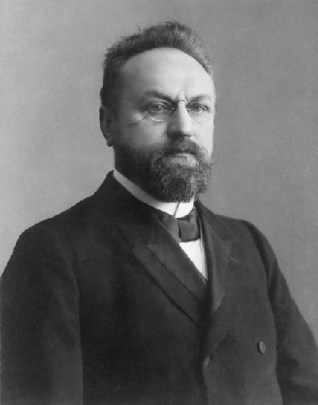
Herman BavinckI don’t believe the Bible is a book of heroes. The Bible does have heroes in it, but that is not what it is about. It is a book about the Hero. Nonetheless, I do believe in having heroes, and I believe it is Biblical to have them.

Heroes are not perfect, and thus they point us to Christ in three ways. Their faults (weaknesses and sins) point us to the Savior that they, and we, all need. With this foundation we learn two further truths concerning their strengths. First, they are a result of God’s gifting and working in them such that He gets all the glory. Second, their strengths also point us to Jesus by whom they are graded – Jesus is the ultimate curve breaker. All heroes are judged in relation to Him.

Every year I single out one hero to study in particular. This year I will study the life and works of Herman Bavinck.

Herman Bavinck (1854-1921) was a Dutch Reformed theologian. Early in his career he acted as a pastor for one year. Thereafter he began teaching at Kampen Theological Seminary where he remained for 20 years before moving to the Free University of Amsterdam.

Theologian extraordinaire, still he loved the church and always served her, and constantly preached for her. He was especially well loved by his students, understood the arguments of those with whom he disagreed, stated the truth clearly, and sought peace insofar as he could.

His magisterial work, Reformed Dogmatics will be the focus of my reading this year; only recently has the full translation of which been made available in English. John Frame says it is “by far the most profound and comprehensive Reformed systematic theology of the twentieth century.” Richard B. Gaffin Jr. writes that it is, “Arguably the most important systematic theology ever produced in the Reformed tradition.”