Coming Back Around, but No Going Back (2 Samuel 12)

As we boomerang back from the middle of this chiasm in chapters 11 and 12, we’re both hopeful and fearful of what may come back around. Chiasms are literary devices that have an ABCBA kind of pattern to them, bringing us back to where we began. Therein is our hope—that we will boomerang back to the David we knew before all of this mess. Bring back the lion-like conqueror and the lamb-like servant of Yahweh who shows covenant lovingkindness!

But we’re also afraid. We’re afraid of what David’s sin might bring back around from earlier in the book of Samuel. The prophet comes with a word for David in his sin. Every time the word of God came to Saul, it only exacerbated his sinfulness. The prophet comes to Saul with a Word from God. Saul disregards the prophet. The prophet returns with another word. Samuel declared to Saul, “Because you have rejected the word of the LORD, he has also rejected you from being king” (1 Samuel 15:23).

But Saul was a king like the nations. He was never a man after God’s own heart. The saints may sin like sinners, what sinners cannot do is rise like the saints. They cannot repent and pursue righteousness as the saints do. Thomas Brooks wrote, “Ah, souls, you can easily sin as the saints, but can you repent with the saints! Many can sin with David and Petter, that cannot repent with David and Peter, and so must perish forever.” The saints can sin the same sins, but they cannot sin in the same way, for they have a new heart—a heart that hates sin and loves righteousness.

Still, sin deadens and deafens. Sin is drifting and sin causes us to drift. What truly separates the saint from the sinner is the Savior. The answer for faith and repentance is always never found within but without. The saints persevere because God preserves. God not only saved David in the past. He is saving David in this moment. And He does so, by His word.

David is both the most dramatic picture of the Messiah and the most dramatic picture of our need for the Messiah. Walter Bruggeman says that this text tells us “more than we want to know about David and more than we can bear to understand about ourselves.” This is a hard word, but it is a gracious word. It tells us all that we are sinners. It tells us all that Yahweh is a Savior.

Nathan’s word of judgment proves to be a word of grace, bringing David to repentance. This hard word softens hearts. By His Word, God saves sinners and sanctifies the saints. David in his climb has been exemplary and stunning, but David in his fall is comforting. There is grace for sinners. There is grace for saints.

There is comfort. There is grace. But there is no going back to the way things were before. But perhaps there is hope for something even better in the future? Surely David’s story left some Israel saying, “Oh, if only the Lord’s Anointed could come to us and manifest Yahweh’s grace without the sin!” Perhaps this was the hope held out for his son, Jedidiah, beloved of Yahweh. No. He too would fall.

But then came great David’s greater Son, the true builder of the true temple. The High Priest who is able to sympathize with our weaknesses, who in every respect has been tempted as we are and is yet without sin (Hebrews 4:15). The sinless Son who died for sinners. Here is great David’s greater Son, who died so that David, and all sinners might know forgiveness. We have not a sinful king who lived. We have a sinless King who died. And then He rose triumphant over all, over Satan, sin, and death. We have not gone back to where we were before. We have gone forward to something far better. Though we too fall, though we may not go back, we have assurance that something better lies ahead.

Stronger and Stronger (2 Samuel 3:1–39)

“There was a long war between the house of Saul and the house of David. And David grew stronger and stronger, while the house of Saul became weaker and weaker.”

2 Samuel 3:1

David grows stronger and stronger. The house of Saul becomes weaker and weaker. We expected this to be so. We have longed for this to be so. But, why is it so? How is it so? The answer is not only surprising. It is shocking. Don’t fail to connect this opening summary with what follows as an explanation thereof.

The house of David grows stronger by growing bigger. David has children, takes more wives, and has more children.

The house of Saul grows weaker as Abner grows stronger. A strong Abner grows tired of a weak Ish-bosheth.

The house of David grows stronger as Abner works to deliver Israel over to David.

Joab murders Abner, but the people see David’s reaction and are pleased by it, understanding that he had nothing to do with his death. Even this works so that David grows stronger.

How is it that David grows stronger and stronger and Saul’s house grows weaker and weaker? The answer is as surprising as it shocking. It happens through sin, by sinners, and for sinners. This is not a tale of how good any man is, but how good God is to sinful man. What a mess. What grace. There is a Savior who is sovereign over sinners for their salvation.

David grows stronger and stronger and the house of Saul grows weaker and weaker, not because David is good and Saul is bad. No, all this happens because God is holy and God is gracious. He is Yahweh, “a God merciful and gracious, slow to anger, and abounding in steadfast love and faithfulness, keeping steadfast love for thousands, forgiving iniquity and transgression and sin, but who will by no means clear the guilty, visiting the iniquity of the fathers on the children and the children’s children, to the third and the fourth generation” (Exodus 34:6–7).

The house of David grows stronger not because of the plans of Abner or the plots of Joab or the righteousness of David, but the faithfulness of God. Abner’s plan turns against him. Joab’s plot is wicked and cursed. David’s righteousness falls short. But God’s faithfulness does not fail. The Sovereign God uses the surprising, even the shocking. He uses sinners to bring His salvation. Yes, David gets many sons by many wives, but one of those sons will be the son of David.

We see something of the doctrine of concurrence here. That doctrine is best summarized by Joseph when he tells his brothers, “As for you, you meant evil against me, but God meant it for good, to bring it about that many people should be kept alive, as they are today” (Genesis 50:20). “You meant.” “God meant.” Both meants are meaningful. They are both true.

The doctrine of concurrence basically tells us that though men are responsible, God is sovereign. It explains that God’s providence rules over all things, even the sinful actions of men, but in such a way that God does not sin while men do. Men sin. And God is sovereign. And here is the most surprising and shocking thing of all. He is sovereign over sinners and through sinners for the salvation of sinners. By His sovereign rule, over even the sins of men, the house of David grows stronger and stronger and the kingdoms of this world grow weaker and weaker.

Desperate sinner, behold the sovereign salvation of the Savior and do not fear that your sins are bigger than His grace. It is surprising and shocking, but the kingdom of Jesus is seen to grow stronger as He is sovereign over sinners and saves sinners through sinners. Behold Christ on the cross and hear the true and better Joseph declare, “You meant evil against me, but I meant it for good, to bring it about that many people should be kept alive, as they are today.”

His Inescapable and Immutable Word (1 Samuel 28:3–5)

16 And Samuel said, “Why then do you ask me, since the Lord has turned from you and become your enemy? 17 The Lord has done to you as he spoke by me, for the Lord has torn the kingdom out of your hand and given it to your neighbor, David. 18 Because you did not obey the voice of the Lord and did not carry out his fierce wrath against Amalek, therefore the Lord has done this thing to you this day.

—1 Samuel 28:16–18

Two dark chapters are set side by side, the two darkest we’ve seen in the life of Saul and David up to this point. Two dark chapters, but the darkness is different. Child of God, take heart, the darkest chapters of the saints are so very different from those of sinners. Better the dark days of David than the bright days of Saul so certainly then better the dark days of David than the darks days of Saul.

But there is not only contrast; there is irony. David doesn’t appear to seek Yahweh. Saul explicitly does. “Yahweh” doesn’t appear on David’s lips. Saul swears by Yahweh. David is with the Philistines. Saul is against them. And yet, by the end of these two chapters, there is hope for David and none for Saul. There is a light at the end of the chapter that appears “God-less” and despair at the end of this chapter that appears “God-full.” That is both a resolute grace and an irrevocable judgment. David can’t mess up the grace. Saul cannot work around the judgment. God will do what He said He will do. He does not lie. Saul will be brought down. David will be raised up. This is God’s inescapable and immutable word.

When Samuel first spoke these words to Saul after he failed to devote the Amalekites to destruction, Samuel explained, “the Glory of Israel will not lie or have regret, for he is not a man, that he should have regret” (1 Samuel 15:29). Saul is seeing to make a liar out of the eternal God of truth.

When Balak asked Balaam to curse Israel, the pagan prophet received this word from Yahweh, “God is not man, that he should lie, or a son of man, that he should change his mind. Has he said, and will he not do it? Or has he spoken, and will he not fulfill it? Behold, I received a command to bless: he has blessed, and I cannot revoke it. He has not beheld misfortune in Jacob, nor has he seen trouble in Israel. The LORD their God is with them, and the shout of a king is among them” (Numbers 23:19–21).

Balak refuses this word, and seeks another. Still, Balaam declares, “…his king shall be higher than Agag, and his kingdom shall be exalted. God brings him out of Egypt and is for him like the horns of the wild ox; he shall eat up the nations, his adversaries, and shall break their bones in pieces and pierce them through with his arrows. He crouched, he lay down like a lion and like a lioness; who will rouse him up? Blessed are those who bless you, and cursed are those who curse you” (Numbers 24:7–9).

Balak is furious, still Balaam declares, “I see him, but not now; I behold him, but not near: a star shall come out of Jacob, and a scepter shall rise out of Israel; it shall crush the forehead of Moab and break down all the sons of Sheth. Edom shall be dispossessed; Seir also, his enemies, shall be dispossessed. Israel is doing valiantly. And one from Jacob shall exercise dominion and destroy the survivors of cities!” (Numbers 24:17–19).

Do you hear this? God has always had this singular, inescapable, and immutable Word, the Word become flesh, the crucified flesh risen in glory, raised to the right hand of the Father, King of kings and Lord of Lords. You cannot make a liar out of God.; Jesus is King. This Word cannot be unspoken: Jesus is Lord. Stop rebelling against this Word. Stop seeking other words. Stop trying to out shout God.

God is doing what He said He would do. All have sinned and fallen short of the glory of God. The wages of sin is death. All evil doers will be cast into the lake of fire. This is His inescapable and immutable word.

God is doing what He said He would do. Christ lived to be the righteousness of sinners. He died bearing judgment in their stead. He rose conquering sin, death, and Satan. All who call on the name of the Lord will be saved. This is His inescapable and immutable word.

Trinitarian Systematics

“[T]he entire Christian belief system stands or falls with the confession of God’s Trinity It is the core of the Christian faith, the root of all its dogmas, the basic content of the new covenant. The development of trinitarian dogma was never primarily a metaphysical question but a religious one. It is in the doctrine of the Trinity that we feel the heartbeat of God’s entire revelation for the redemption of humanity. We are baptized in the name of the triune God, and in that name we find rest for our soul and peace for our conscience. Our God is above us, before us, and within us.”

—Herman Bavinck, Reformed Dogmatics 

“Trinitarian Systematics? What’s that?” Systematic theology is the discipline of collecting and ordering the Bible’s teaching. Trinitarian systematics is systematic theology done right.

Redemption is revelatory. Revelation is redemptive. When God redeems, He makes Himself known. When God makes Himself known, He redeems.

When God redeems, He makes Himself known:

“Say therefore to the people of Israel, ‘I am the LORD, and I will bring you out from under the burdens of the Egyptians, and I will deliver you from slavery to them, and I will redeem you with an outstretched arm and with great acts of judgment. I will take you to be my people, and I will be your God, and you shall know that I am the LORD your God, who has brought you out from under the burdens of the Egyptians” (Exodus 6:6–7)

When God makes Himself known, He redeems:

“And even if our gospel is veiled, it is veiled to those who are perishing. In their case the god of this world has blinded the minds of the unbelievers, to keep them from seeing the light of the gospel of the glory of Christ, who is the image of God. For what we proclaim is not ourselves, but Jesus Christ as Lord, with ourselves as your servants for Jesus’ sake. For God, who said, ‘Let light shine out of darkness,’ has shone in our hearts to give the light of the knowledge of the glory of God in the face of Jesus Christ” (2 Corinthians 4:3–6).

God’s redemption reveals Himself as Father, Son, and Holy Spirit. God’s redemption reveals God as Triune, not as an aside, but as intrinsic to our redemption. The Trinity is not a trailer arbitrarily tacked on to the main attraction. It is the main attraction. Our salvation is from the Father, through the Son, and by the Spirit. We were chosen by the Father, redeemed through the Son, and are being sanctified by the Spirit.

Not only does God’s redemption reveal the Trinity, the Trinity is the foundation for systematic theology. The Trinity is not just systematic theology being rightly done, the Trinity is the grounds for systematics. The Trinity is not first a conclusion of systematic theology, but the warrant for it. Our salvation has a shape. Systematic theology recognizes that shape and justly utilizes it.

Consider the loci of standard systematic texts. These are the categories under which systematic theology systematizes. There is some variation, but here’s a condensed outline for a typical systematic theology text.

  • Scripture
  • Theology Proper (the doctrine of God)
  • Anthropology (the doctrine of man)
  • Christology (the study of Christ)
  • Soteriology (the doctrine of salvation)
  • Ecclesiology (the doctrine of the church)
  • Eschatology (the doctrine of the last things)

Do you see it? Father, Son, and Holy Spirit! If you’re wondering where the Spirit is, remember how He works. He is the Spirit of Christ. Look closely at the doctrines of soteriology and ecclesiology and you’ll see Him applying our salvation and creating the church. The Biblical storyline gives systematic theology this basic shape and the Biblical storyline is Trinitarian. God created man. He redeems man in Christ. By the Holy Spirit, He applies Christ’s redemption to His church. 

Though the works of our Triune God are undivided (opera Trinitatis ad extra indivisa sunt), certain acts are appropriated to the Father, Son, and Holy Spirit, highlighting the Trinitarian shape of the Biblical narrative. We are chosen by the Father, redeemed by the Son, and sanctified by the Spirit. Again, our salvation is from the Father, through the Son, and by the Spirit. 

The redemption and revelation of our Triune God give both shape and form to the Biblical storyline and thus to systematic theology. The Trinity is the foundation and warrant for systematic theology. Systematic theology doesn’t so much yield the Trinity as the Trinity yields systematic theology. We know the Father through the Son by the Spirit. When we do systematic theology, we do it from inside the revelatory redemtion of our Triune God, recognizing its own contours. All things are from, through, and to the Three in One (Romans 11:36), including every Biblical venture to rightly do systematic theology.

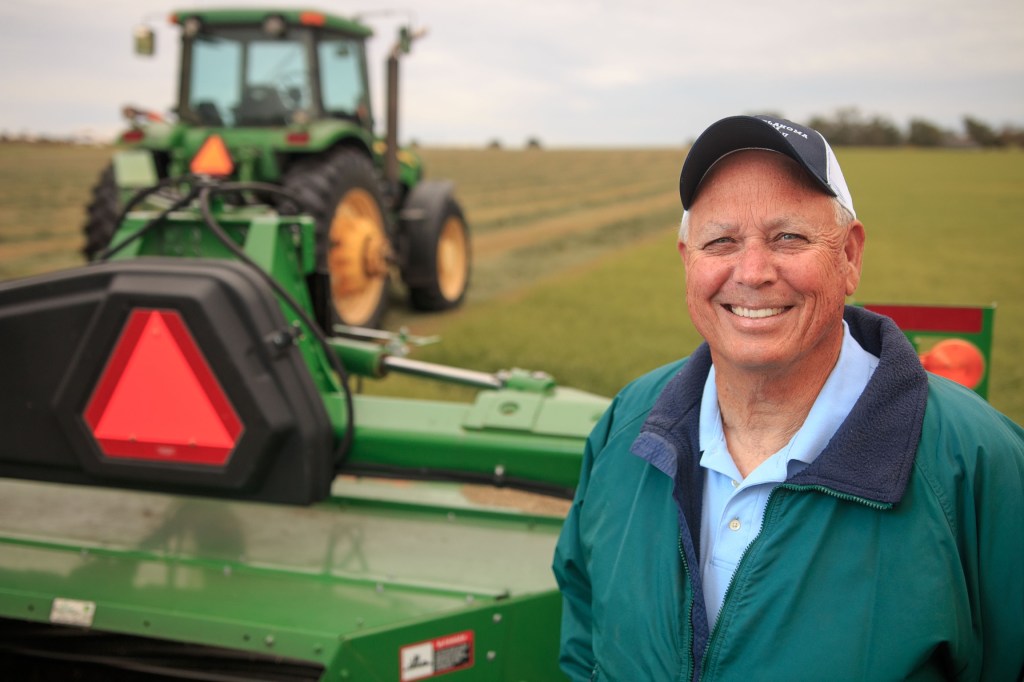
Friday Was Hard. Saturday Was Better. Sunday Was Best.

“Praise the LORD! Oh give thanks to the LORD, for he is good, for his steadfast love endures forever!” —Psalm 106:1

Sometimes a whisper can be so loud. “God is so good.” Short of breath and soft of voice, my dad was shouting this the last Saturday we spent with him. Again and again, with tears in his eyes, he told us, “God has been so good to me.” Dad didn’t get the opportunity to tell of the Lord’s goodness to him in his last hours. Who does? So here’s my feeble attempt to capture a smidgen of God’s final kindnesses to him.

“Precious in the sight of the LORD is the death of his saints.” —Psalm 116:15

To understand his last days we need to back up a month or two. While dad’s death came suddenly, it was an expected visit, like family showing up early for Christmas. You expected them, just not so soon. As dad prepped to cross that bridgeless river over to the celestial city, he essentially had four prayers requests. First, he asked that he finish well. He wanted to testify with Paul, “I am already being poured out as a drink offering, and the time of my departure has come. I have fought the good fight, I have finished the race, I have kept the faith. Henceforth there is laid up for me the crown of righteousness, which the Lord, the righteous judge, will award to me on that day, and not only to me but also to all who have loved his appearing” (2 Timothy 4:6–8).

His second and third requests were wed together. He asked for peace. He asked that he not have to struggle. Lonnie had watched his brother Donnie battle this same foe. Donnie had to fight for air. Lonnie did not want to have to endure that. Dad didn’t fear death. It was the dying that caused him anxiety. He was certain of his soul. It was what his body might have to endure that needled his mind. “I don’t fear death, but if you ask me about dying, that’s another matter,” writes R.C. Sproul. “If I could just close my eyes and step across into heaven, that would be glory for me, but none of us knows the route we will take. It may be one that includes great affliction, pain, and suffering. But the travail will be for a moment compared with the other side.” Dad was prepping for a struggle, but he was not seeking it.

Finally, dad asked that we pray for the one he had wed. Expressing gratitude to God for how his suffering had brought them closer, he asked that we pray for mom. He wanted them to continue to grow to be one flesh. He didn’t want to suffer. He didn’t want her to suffer. He didn’t want her to suffer seeing him suffer. Besides prayer, the only thing he asked of me was that I be there for mom at the end. If he was to pass like Donnie, dad didn’t want her to have to endure that alone.

Four requests. Everyone of them answered exceeding abundantly beyond what was asked. God is so good.

Friday, March 7th, 2025

“Do not be deceived, my beloved brothers. Every good gift and every perfect gift is from above, coming down from the Father of lights, with whom there is no variation or shadow due to change.” —James 1:16–17

Friday was hard. But some days were. And there is goodness even in the hardness. All the time, God is good.

To avoid a coughing fit dad was constantly sucking on a piece of candy or a cough drop (but aren’t Luden’s really just covert candy?). Having always been so active, my now sedentary father became concerned about gained weight. He blamed the candy. So he had mom buy him some sugar-free stuff. Friday evening he choked on one. He panicked. He asked mom to call Carolyn, a friend, church member, and EMT who lives just a couple of miles away. By country standards that’s a next door neighbor, and Carolyn would soon prove herself to be the best kind of neighbor. But she was unnecessary that evening. Mom calmed him and got him some warm tea. The candy dissolved. The fears were slower to dissipate.

They were both worried. Dad had been sleeping in his recliner for some time. It made it easier to breath. That evening mom decided to sleep in her recliner near him. Because his voice was so weak, they agreed that he would throw a pillow at her if he needed her. If it wouldn’t have caused unnecessary panic, I know there’s a part of him that would’ve loved to have thrown that pillow just for kicks. They made it through the night without incident. God is good.

Saturday, March 8th, 2025

“The steadfast love of the LORD never ceases; his mercies never come to an end; they are new every morning; great is your faithfulness. ‘The LORD is my portion,’ says my soul, ‘therefore I will hope in him.’” —Lamentations 3:22–24

Saturday was better. Some days were. God is so good.

Because of the rough night, mom pressed that they put off signing lease papers for the farms until Monday. But dad was insistent. It had to be today. The papers were signed. He was getting his house in order. The papers would sit on the arm of the sofa next to him until Sunday dawned. God is so good.

“3-8-25.” There are a smattering of dates in dad’s Bible, but to my knowledge, most all of them are accompanied by the name of the pastor who preached that text. Dad’s Bible is full of personal notes, but this is the only one I’ve found that he dated. He underlined these words, “I will behold thy face in righteousness: I shall be satisfied when I awake, with thy likeness” (Psalm 17:15) In the margin are two notes. “Lord is my Rock.” “My destiny.” The next morning Kim and Kris would separately go down to his office to find his Bible still open to this spot. They left it for me to see later that afternoon. God was so good to him. He was so good to us. With his life, dad preached the message that does not die. Through faith, being dead, yet he speaks (Hebrews 11:4). He testifies still “God is so good.”

Friday was hard. Saturday was better. Mom and dad talked it over. She would sleep in the bed and get some needed rest.

The Lord’s Day, March 9th, 2025

Sunday was best.

Mom woke and came down the hall to find dad poised comfortably in the recliner. His mouth was open and she was readying to remind him that the oxygen did him no good when he was breathing through his mouth, but then she noticed that his chest was not moving. Overwhelmed, she didn’t know what to do. “Carolyn!” If dad had never asked for her on Friday mom isn’t sure she would’ve had that thought. Carolyn, like the best of neighbors, rushed over in her pajamas, consoled my mom, and made the necessary calls. Carolyn and Andee (the caring owner and director of the local funeral home) both agreed that dad had not struggled. He died peacefully, with a half-used sugar-free candy laid neatly on his sweatshirt by his collarbone. God is so good.

Dad loved Sundays. It was for this farmer, as the puritans would say, the market day of his soul. This farmer went to market. Dad loved to sing. He loved to praise the Lord. But he had been unable to sing for some time. He had not been to market in weeks. He sorely missed church. But early that Lord’s day, as his body breathed its last, his soul breathed its first breath of unhindered praise. The Lord’s Day dawned with the light of the Son who is the Resurrection and the Life. Dad woke satisfied. His eyes feasted on the glory of Him who is altogether lovely. “O for a thousand tongues to sing my great Redeemer’s praise.” God is so good.

Sometime in the weeks before this, mom went down to the study to find dad listening to a Gaither singing. He loved such singings. He and mom went to several concerts over the years. Growing up, it was rare to get ready for the Lord’s Day without a Gather VHS being played loud enough to be heard throughout the house, dad’s voice being added from the bedroom, or the hallway, or the living room, or the kitchen. But this day he told mom he didn’t think he could watch them anymore because he got too excited. His excitement would make it hard to breath. But on that Lord’s Day, March 9th, 2025, he awoke to heaven’s praises, and there was no need to curb his excitement. He could join the choir. He could let ‘er rip.

Friday was hard. Saturday was better. Sunday was best. God is so good.

This Is My Story, This Is My Song

This Is My Story, This Is My Song

by Lonnie King

I’ve lived two lives: thirty-six years I lived without Christ; thirty-four years with Christ Jesus. Two completely different lives. I really don’t like to talk about my life before Christ, because some things are easier if left unsaid.

Let me just say, life was hard for me. I considered myself a misfit, never really at home in this world. I struggled with most every part of life—school, family, relationships, and life in general was difficult. To a large extent, I isolated myself in my little world. My shyness became worse with each new challenge of life. I had no one to confide in. Even in a crowd of people, I was alone and I hated myself.

This confession may sound silly to you, but I am convinced that there are lot of folks just like me who have struggled with life to some extent. In Adam, in our natural birth, we are all born broken, separated from our great Creator-Savior God. Even though I had great advantage over others, my problems were real. I longed to be like others, but I was stuck in my little world of loneliness and despair.

Chapter One: The Beginning

“Be still and know that I am God!” (Psalm 46:10).

The most important and greatest thing that mom and dad did for me, was to make sure that I was in a solid Bible church. Of course I hated it in my youth, but that is where I learned about God and saw broken people changed and made whole.

My shyness created a prison for me with no means of escape. I hated myself. I longed to be like others, but I was stuck in my little lonely world. I had no idea that my silence would someday become an asset. One thing I learned in my silence is that most people who talk a lot, don’t really have much to say. However, the greatest benefit of my silence was that it forced me to listen. Isolated in my silence, I heard wonderful teaching and preaching in this church. I also heard dynamic testimonies and was an eyewitness of faithful followers of the Lord Jesus! During those days of my youth there was another voice that came to me, a voice from above, the voice of my unknown Friend.

He did it countless times over and over again. My silent world was interrupted repeatedly by His still small voice not only in church but in private and public places. My unknown Friend came to me, over and over again, for He wanted me, He wanted to help me, but I just couldn’t believe that anyone would want me. I hated myself.

Chapter Two: The Lie

“A man that has friends must show himself friendly: and there is a friend that sticks closer than a brother” (Proverbs 18:24).

In 1965 an altar call was given here at Oakdale. I and three others went to the altar that night, but by the time they got to me, my shyness, my fear had kicked in. Someone asked, “Are you saved?” I responded with a lie. “Yes, I’m saved.” But I wasn’t. I lied to the church. I lied to my dad later that night. I lied to myself. And I lied to my unknown Friend, and He knew it and I knew it. The church baptized me and gave me a brand new red Bible that I never read, for it was all a lie.

No one else really understood what was happening on that night when out of fear I lied. I carried that lie with me, which made me hate myself even more. I was a coward and I was alone with my lie, filled with shame. Once you start down a road of bad decisions and lies, it’s hard to to get off that road, for one lie leads to another. I became a very good liar!

The good news is this: my unknown Friend knew what I had done and had every right to walk away and never come back to me again, but He was different. He chose to come back, in spite of who I was and what I had done. I was a liar and a fake, yet he chose to set His love upon me, to not give up on me!!! That’s amazing, undeserved grace!!!!!!

Lots of folks tried to help me down through the years and I appreciate them so much. I had good parents who tried to help. Some good school teachers who tried to help. Coaches who tried to help. Even strangers tried to help. But they all would eventually move on when I failed to respond. However, my good Friend that I did not know kept coming back to me over and over again, for He wanted me like no other could or would.

Think about this: I violated my Friend’s perfect law. I violated my Friend’s Holy Table. I dishonored my parents. I lied to classmates and to my church, but my good Friend was different from everyone else. He did not quit on me! He chose to be merciful, He chose to be gracious, He chose to love me, a scared little boy who grew to be a scared man living in darkness, alone and ashamed of what he had done, but I could not find a way out.

Chapter Three: Running From God

“Take heed brethren, lest there be in any of you  an evil heart of unbelief in departing from the living God” (Hebrew 3:12).

As a young adult I began to make those big life decisions that set our course of life in this world. If you think life gets easier as you age, you are wrong. I found myself falling into sin over and over again. Booze became my new friend, and all of the things that come with that lifestyle, I embraced. It got to the point that I became self-righteous, defending my sin as normal and good. I defended booze and laughed at those who opposed it. You see my life became darker and darker with each new found sin. I did things that I never thought I would do and am still ashamed of today.

As I slipped deeper and deeper into darkness, that still small voice that I had heard so often and so clear as a child was drowned out by my sin. I was running from my Friend that I knew not, yet even in those days, from time to time He would break through, reminding me that He loved me and wanted me!

I married and had a family, which I was completely and totally unprepared for. I was a terrible husband and dad. I failed over and over again. The struggles that plagued me as a child were still with me and it wasn’t getting any better.

I pursued the American dream of riches and wealth and found no peace. I still depended on the booze to make life tolerable, but it brought no permanent relief. I needed help. I needed a Friend who could lift me up, who could change my life, my heart, and my destiny. I needed a Friend who could remove my guilt and shame. I needed a Friend who could forgive my lies. I needed a new beginning, a fresh start, but how it could ever happen, I could not see.

Chapter Four: A New Day

“Be not drunk with wine, wherein is excess, but be filled with Spirit!” (Ephesians 5:18).

Running from God gets old. I filled my life with things—new home, new cars, and new tractors—but none of these things brought peace to me. My health began to change and I thought about death more often than I ever had. I was scared, fearing the unknown, fearing death!

April 1st, 1990, laying in my bed on a Sunday morning, my unknown Friend showed up once again. The church that I had lied to as a child, the church that I had abandoned for years was in revival. I have no doubt that they had been praying for me! I was thirty-six years old and I was scared of the dark. I was still carrying my shame, my lie, and all of the sins that I had added to my dirty laundry list of life. The Holy Spirit was calling me to salvation, calling me to go back to the church that I had lied to and abandoned so long ago, but I didn’t have the strength. The Lord provided a crutch for me in the person of my son Josh. I asked him if he would go to church with me and he replied yes! I am convinced that had he not said yes, then I would not be writing these words of joy and deliverance.

When we got to church, we sat on the back pew. The Holy Spirit was calling me to salvation and when the invitation was given, I walked down to the altar where my unknown Friend who never gave up on me was waiting. I kneeled at his feet and cried to Him for help. I told Him of my sinfulness. I told Him that I believed in Him. I told Him that I needed to be saved, that I wanted to be saved, and then I simply asked, “Please, save me!”

Instantly, in a split second, my shame, my fears were relieved and a peace from above came down and gave me a new life, a new beginning, a fresh clean start. For the first time in my life, I knew my unknown Friend personally; His name is Jesus, Jesus, Jesus, my God, my Savior, and my best Friend forever! He was what I was missing for thirty-six years. He was what I needed and He gave me life and a new start. For the first time in my life, I started living with joy and purpose. And now I am with Him, made perfect in Christ Jesus by His wondrous grace.

This is my Story, this is my Song! What about you? Do you have a story to tell? Do you have a song to sing? Do you have a testimony before men concerning the Lord Jesus? In other words, are you saved? Have you be born again from above, have you received the risen Jesus as your personal Savior?

If not, then do it. Right now. Right here. Answer the divine call of the Holy Spirit, confessing your sinfulness to the Lord, then run to our risen Savior by faith, trusting in our great Savior God who died in our place, so that we could live in His place.

My prayer today is that no one would leave here without Christ Jesus in their hearts. Trust Him right now and be saved!

Strong Weakness

“Three times I pleaded with the Lord about this, that it should leave me. But he said to me, ‘My grace is sufficient for you, for my power is made perfect in weakness.’ Therefore I will boast all the more gladly of my weaknesses, so that the power of Christ may rest upon me. For the sake of Christ, then, I am content with weaknesses, insults, hardships, persecutions, and calamities. For when I am weak, then I am strong” (2 Corinthians 12:8–10).

My dad was diagnosed with “farmer’s lung” about five years ago. Of the six little peanuts sown into this world by Floyd L. King, Lonnie was the third to ripen with lung disease. It progressed slowly for years, then the orange handle was thrust from tortoise to hare. The first time I watched him take a breathing treatment I had to look away. I was a sickly kid. I was small. I was weak. I went to the doctor all the time. I was asthmatic. Dad was always healthy. Dad was always big. Dad was always strong. Dad never went to the doctor. Dad had a set of lungs. I know this because he frequently used those lungs to wake me to “move pipe” (irrigation pipe), singing “O What a Beautiful Morning.” I was not entertained then. I am thankful now.

It’s true that most every little boy thinks that their dad is big and strong, but I never grew out of this. Through junior high some folks told me I’d get taller like my dad. False prophets. Dad was six foot two. Mom never broke five. I fell in-between. Dad’s shoulders were broad and his arms were darkly tanned from hours of hard work in the sun. My skin grew darker, but I neither grew taller nor broader. And so I never grew up. My dad remained big and strong. I never suffered any disillusion about taking my dad.

Until I saw him taking that first treatment. That hit hard. At first. But then he would speak and act, and I saw not weakness, but multiplied strength. The voice grew soft and the body frail, but this only amplified the glory of his strength. Embraced weakness—that was the source of my dad’s true might. This Sampson had lost his hair long ago, but God gave him new eyes to see His glory in Christ. That glory both humbled my dad and lifted him up. His body was big, but his soul was gentle, and his strength was rooted not in his strong body, but his gentle soul. He was meek before the Lord. Humility was his glory. My father decreased. The Lord increased. As there was more death to his body, there was more resurrection in his soul. 

“Unless a [peanut] falls into the earth and dies, it remains alone; but if it dies, it bears much fruit” (John 12:24). Dad died with Christ. He rose to newness of life. He was not alone. By faith, he clung to the vine. He bore much fruit. Suffering sent his roots deeper into Christ. His soul bloomed. He was ripe for harvest. Not because he was weak, but because he was strong.

In one of his classic tales, George MacDonald has this paradoxical take, “…it is so silly of people to fancy that old age means crookedness and witheredness and feebleness and sticks and spectacles and rheumatism and forgetfulness! It is so silly! Old age has nothing whatever to do with all that. The right old age means strength and beauty and mirth and courage and clear eyes and strong painless limbs.”

My dad never really grew weak. He grew stronger. This was not because my dad was strong. It was because he knew he was weak. As another departed saint put it, “Weakness is the way.”

How A Little Light Dominates Great Darkness (1 Samuel 2:11–36)

Then Elkanah went home to Ramah. And the boy was ministering to the LORD in the presence of Eli the priest.

Now the sons of Eli were worthless men. They did not know the LORD.

—1 Samuel 2:11–12

As a general rule, I’d never recommend listening to music while reading, but you must come to this narrative with a song in your head in order to read it rightly. The song is not a distraction, but the key to interpretation. If you try to read the narrative without the song, then you cannot understand it. Hannah’s song leaves you longing for redemptive reversal. A reversal that is to come by judgment. A judgment that comes with the king.

Our passage alternates between short descriptions of Samuel and extended treatments of Eli’s sons. Drawn out dark descriptions are offset by brief glimpses of light. Yet the small hope somehow dominates these dismal days. The little light is secretly bigger than the great darkness.

It’s Hannah’s song that teaches you to read this dark narrative with bright eyes.

“Talk no more so very proudly, 
let not arrogance come from your mouth;
for the LORD is a God of knowledge,
and by him actions are weighed.
The bows of the mighty are broken,
but the feeble bind on strength.
Those who were full have hired themselves out for bread,
but those who were hungry have ceased to hunger.
The barren has borne seven,
but she who has many children is forlorn.
The LORD kills and brings to life;
he brings down to Sheol and raises up” (1 Samuel 2:3–6).

The light is so small. The darkness is so great. But this is precisely why we have hope. This is why we expect the light to prevail. Because we are expecting redemptive reversal.

This is the way our God works. “God chose what is foolish in the world to shame the wise; God chose what is weak in the world to shame the strong; God chose what is low and despised in the world, even things that are not, to bring to nothing things that are, so that no human being might boast in the presence of God” (1 Corinthians 1:27–29).

Ours is the God who brings resurrection light out of crucifixion darkness.

The Deliverance of the King and the Glory of God (Psalm 57)

I cry out to God Most High, 
to God who fulfills his purpose for me.
He will send from heaven and save me;
he will put to shame him who tramples on me. Selah
God will send out his steadfast love and his faithfulness!

My soul is in the midst of lions;
I lie down amid fiery beasts—
the children of man, whose teeth are spears and arrows,
whose tongues are sharp swords.

Be exalted, O God, above the heavens!
Let your glory be over all the earth!


I will give thanks to you, O Lord, among the peoples;
I will sing praises to you among the nations.
For your steadfast love is great to the heavens,
your faithfulness to the clouds.

Be exalted, O God, above the heavens!
Let your glory be over all the earth!

—Psalm 57:2–5, 9–11

The deliverance of David from his enemies and the exaltation of God among the nations are intertwined.

To God Most High David cries and from the Most High he receives salvation. David cries and God sends and saves. The Most High sends from heaven. This sending means salvation for David and shame for his enemies. What is it that God Most High sends that saves and shames? It is His steadfast love and faithfulness. These are the attributes God used to define His name in Exodus 34. “The LORD, the LORD, a God merciful and gracious, slow to anger, and abounding in steadfast love and faithfulness…” (Exodus 34:6). God sends His name. God sends Himself.

David is a king to whom God sent His steadfast love and faithfulness. Jesus is the King whom God sends as His steadfast love and faithfulness. God the Father sent God the Son to save His people and shame His enemies. Jesus is the name of God. Jesus is the steadfast love and faithfulness of God. Jesus is God Himself, sent to save.

The King is the answer to a king’s prayer. But Jesus is not only the salvation sent to a king. He is also the King to whom salvation is sent. Jesus’ deliverance through resurrection results in God’s glory. Paul tells us that though Jesus “was in the form of God, did not count equality with God a thing to be grasped, but emptied himself, by taking the form of a servant, being born in the likeness of men. And being found in human form, he humbled himself by becoming obedient to the point of death, even death on a cross. Therefore God has highly exalted him and bestowed on him the name that is above every name, so that at the name of Jesus every knee should bow, in heaven and on earth and under the earth, and every tongue confess that Jesus Christ is Lord, to the glory of God the Father” (Philippians 2:6–11).

Because the King has been delivered in His resurrection, God is exalted in all the earth. God is exalted above the heavens in the salvation of His King such that His glory is over all the earth!

Hear the King lament:

“‘Now is my soul troubled. And what shall I say? “Father, save me from this hour”? But for this purpose I have come to this hour. Father, glorify your name.’ Then a voice came from heaven: ‘I have glorified it, and I will glorify it again.’ The crowd that stood there and heard it said that it had thundered. Others said, ‘An angel has spoken to him.’ Jesus answered, ‘This voice has come for your sake, not mine. Now is the judgment of this world; now will the ruler of this world be cast out. And I, when I am lifted up from the earth, will draw all people to myself’” (John 12:27–32).

Hear the King exclaim:

“And Jesus came and said to them, “All authority in heaven and on earth has been given to me. Go therefore and make disciples of all nations, baptizing them in the name of the Father and of the Son and of the Holy Spirit, teaching them to observe all that I have commanded you. And behold, I am with you always, to the end of the age” (Matthew 28:18–20).

Don’t Lose Your Religion

If anyone thinks he is religious and does not bridle his tongue but deceives his heart, this person’s religion is worthless. Religion that is pure and undefiled before God the Father is this: to visit orphans and widows in their affliction, and to keep oneself unstained from the world.

—James 1:26–27

If you grew up in a typical evangelical church, you probably heard or even said something like this: “Christianity is not a religion, it is a relationship.” Christianity certainly is a relationship, but it is just as certainly a religious relationship. 

The Redeemer of Israel declared from the fire, “I am the LORD your God, who brought you out of the land of Egypt, out of the house of slavery [here is the relationship]. You shall have no other gods before me [here is the religion]” (Deuteronomy 20:2–3). Our Redeemer tells us, “If you love me, you will keep my commandments” (John 14:15). Our relationship with God is covenantal. A covenantal relationship with God means religion. It means commands. It means worshipping Him the way He has told us to.

What is religion? We rarely encounter the word in the New Testament. Outside of these three references in James 1, we find it once in Acts and once in Colossians. By “religion” we could mean those various religions which we find in the world of which one is true and all others are false. This is near the sense of the word when Paul said, “…according to the strictest party of our religion I have lived as a Pharisee” (Acts 26:5).

With this, there is a sense in which we can say that Christianity is not a religion. When we study world religions, we take up the study of man’s quest for “god”—an idolatrous god of his own making. Christianity, in contrast, is a revelation. It speaks not of man’s pursuit of God, but God’s pursuit of man. Nevertheless, the revelation given to man is, we will see, undeniably religious.

Religion more basically refers to our worship, devotion, piety, and obedience. Specifically, the word refers to the outward expression of our worship. You can see this when Paul uses the same word in reference to the “worship of angels” in Colossians 2:18. Paul was not referring to the “religion of angels” but to man’s worship of angels.

Here, James writes to us not concerning true and false religion, as in Christianity versus Hinduism, but religion, true and false, as in the religion of the Pharisees versus that of the disciples. James assumes his listeners are in the true religion. He’s asking if their religion is true. They profess Christianity, but do they posses Christ?—that is his question. Christianity is a religious relationship. Or we might better say it is a relational religion. James is essentially asking if their religion has that relationship.

What is religion? T.J. Crawford provides an excellent definition: “What is religion? So far as regards the intellect, religion is the knowledge of God; and so far as regards the heart and the life, religion is the love, and trust, and worship, and submission, and obedience which we owe to God. It is the intercourse of the creature with the Creator,—of the weak, short-sighted, fallible, and perishing creature, with the almighty, all-seeing, infallible, and eternal God, whose counsels are unsearchable, and whose ways are past finding out.”

Do you see how relational that definition of religion is? Do you see how religious your relationship to God is meant to be? I pray that when you read and reflect on a passage like this, you sense that your “relationship” is is lacking, is less that to be desired, yea, is worthless, if it is not religious. James does not tell us that religion is worthless. He speaks of a kind of religion that is worthless. And opposite of that worthless religion is not a vague spirituality or nebulous relationship. Opposite worthless religion is religion pure and undefiled.