“The God of Israel has spoken;
the Rock of Israel has said to me:
When one rules justly over men,
ruling in the fear of God,
he dawns on them like the morning light,
like the sun shining forth on a cloudless morning,
like rain that makes grass to sprout from the earth.
“For does not my house stand so with God?
For he has made with me an everlasting covenant,
ordered in all things and secure.
For will he not cause to prosper
all my help and my desire?” (2 Samuel 23:3–5)
Yahweh speaks both to His king and by His king. Yahweh speaks to His king about His king and this is His message by His king to His people. So what does Yahweh say to His king?
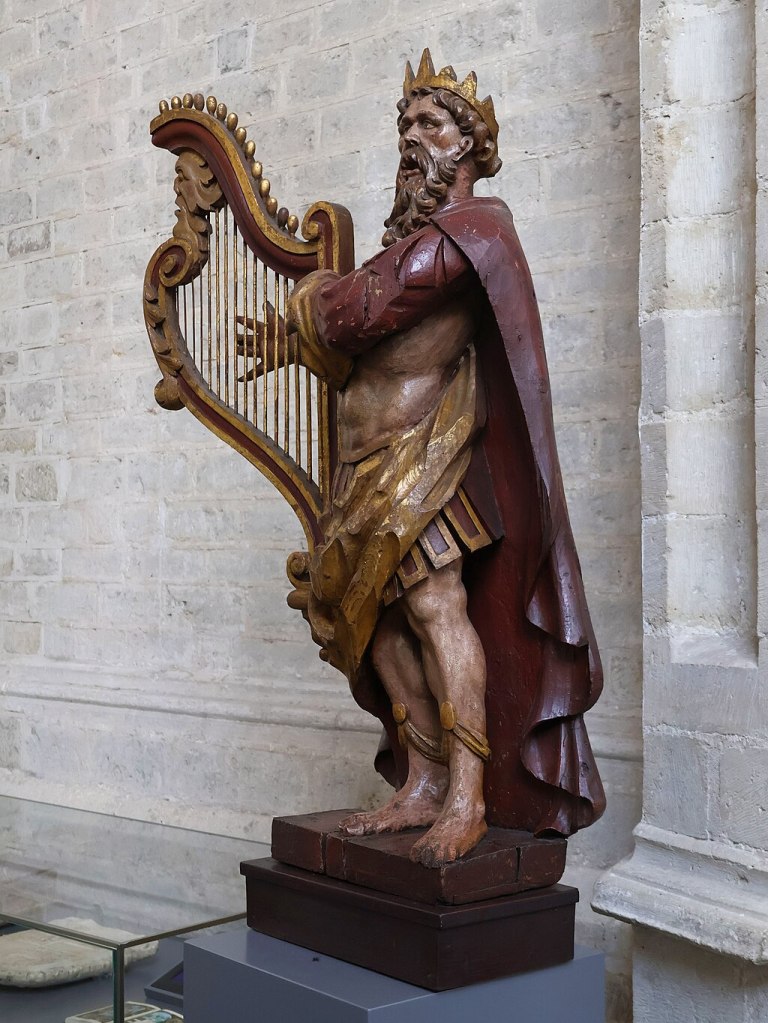
“When one rules justly over men,
ruling in the fear of God,
he dawns on them like the morning light,
like the sun shining forth on a cloudless morning,
like rain that makes grass to sprout from the earth” (2 Samuel 23:3b-4).
Yahweh says to His king that righteous and reverent rule is Edenic. Righteous rule falls like light and reverent rule falls like rain. Godly rule is the perfect mix of sunshine and rain causing the kingdom to flourish as a restored Eden. Godly authority is neither a scorching heat that causes drought, nor a flood that carries away. Righteous rule is not curse, but blessing. Here is how James Montgomery sang of it.
He shall come down like showers
upon the fruitful earth;
love, joy, and hope, like flowers,
spring in his path to birth.
Before him on the mountains,
shall peace, the herald, go,
and righteousness, in fountains,
from hill to valley flow.
This is what Yahweh says to His king. Now, what does He say by His king? What is David’s response to this word? As we look to the answer, two things must be kept in mind. First, David’s response to God’s Word to him is God’s Word to us. Second, David has sinned grievously against God. In the matter of Uriah the Hittite, David did not act justly; he did not fear God.
So what does David say in response to God’s Word as God’s Word to us? “For does not my house stand so with God?” This has reference to David, yet it is bigger than David. “House” here refers to a dynasty. David says “my house.” It refers to David (my), but it is bigger than David (house). This hope of a righteous and reverent Ruler bringing Edenic blessing to God’s people refers to David, yet it is bigger than David.
Why does David say this? Because Yahweh spoke to him. “For he has made with me an everlasting covenant, ordered in all things and secure” (v. 5b). Yahweh had spoken to David a covenant (2 Samuel 7). David reflects on God’s Word to him here in light of God’s Word to him back there, and what God spoke to him back there, was an everlasting covenant, ordered in all things, and secure. This is why David, reflecting on God’s Word concerning the righteous and reverent rule of His king, can exclaim, “For does not my house stand so with God?”
This hope carries you through the scroll of Kings as you see glimpses of light and days of darkness in David’s sons. But while his sons can become darker, they virtually never shine brighter. Still, this hope carries you on. David’s house stands so with God because of an everlasting covenant, ordered in all things, and secure. This hope carries you on until the fulness of time, when from the stump of Jesse, a shoot comes forth.
Hail to the Lord’s Anointed,
great David’s greater Son!
Hail in the time appointed,
his reign on earth begun!
He comes to break oppression,
to set the captive free;
to take away transgression,
and rule in equity.
 No Other Boast